Can You Visit Aokigahara Forest At Night?
Nothing physically stops you, because there is no gate and no ticket. There are still good reasons every source that knows the forest says to go in daylight.
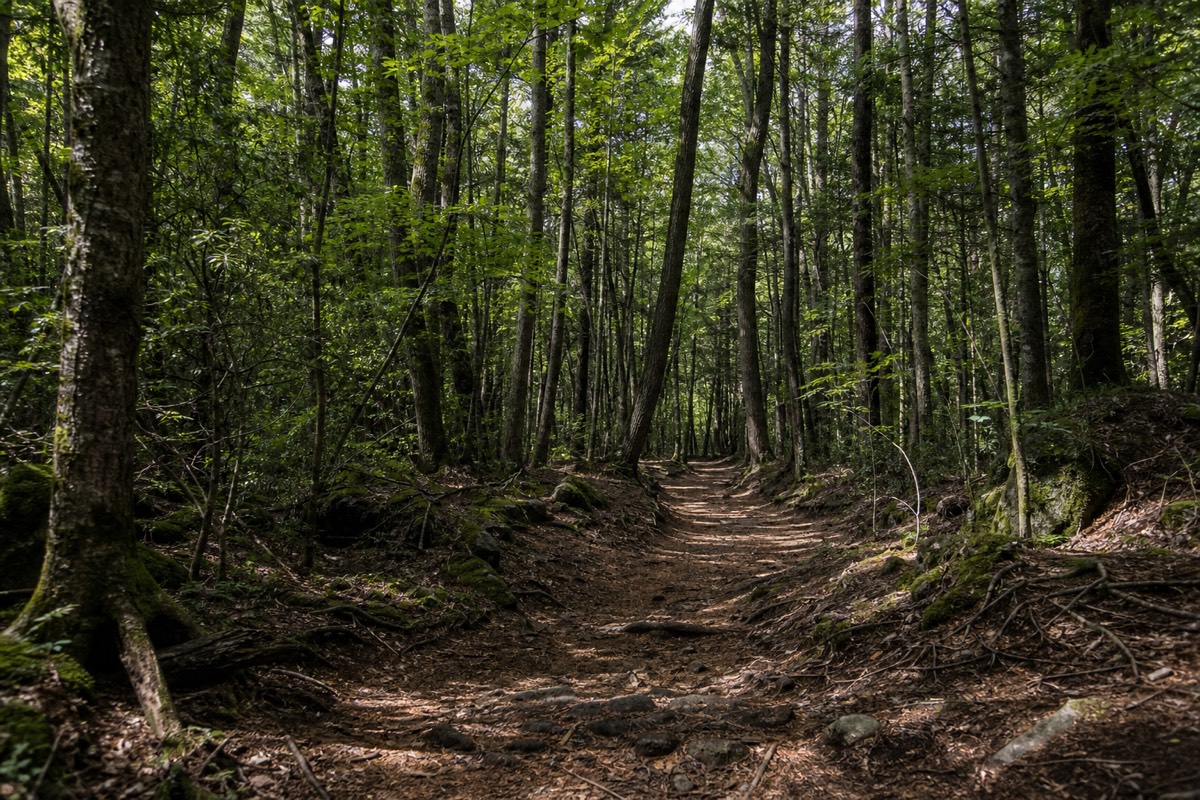
Technically yes. Aokigahara is free, ungated and has no posted opening hours, so the forest is accessible at any time. In practice, go in daylight. The canopy cuts the light long before sunset, the floor is uneven lava that is hard to read in the dark, trail markers stop being visible, and the caves close in the late afternoon.
A daytime nature walk is the practical paid alternative to an after-dark forest visit. Leave enough time for the return journey.
3.5 hours: Geology commentary followed by a quieter stretch beneath the canopy. English guide; meet at NaturaBase opposite Fuji Lake Hotel and return there. Bottled water included; lunch extra.
Walk The Lava Forest With A Guide · Choose by time and starting pointIs The Forest Actually Open 24 Hours?
The forest itself has no operating hours. There is no entrance gate, no admission fee and nobody to check a ticket, which is why sources describe it as open around the clock. That is a statement about access, not a recommendation.
The things around the forest do close. The lava caves keep their own hours and shut in the late afternoon, their ticket counters and car parks with them. Bus service to the cave stops from Kawaguchiko Station is infrequent even at midday, so a late return by public transport is not something to plan around. And there is no lighting anywhere on the trail network, no rangers on duty after hours, and no facilities open once the cave sites shut for the day.
Why Does It Get Dark So Early In There?
The canopy. Aokigahara is a dense forest of mixed conifers and broadleaf trees spread across roughly 30 square kilometres, and the tree cover is thick enough that the light under it drops well ahead of sunset. Photographers notice this most: the shafts of light that make the forest photograph well are a mid-morning to early-afternoon phenomenon, and by late afternoon the floor is already dim. In the shorter days from late autumn through winter, sunset in the Fuji Five Lakes area arrives in the late afternoon, which compresses a usable visit even further.
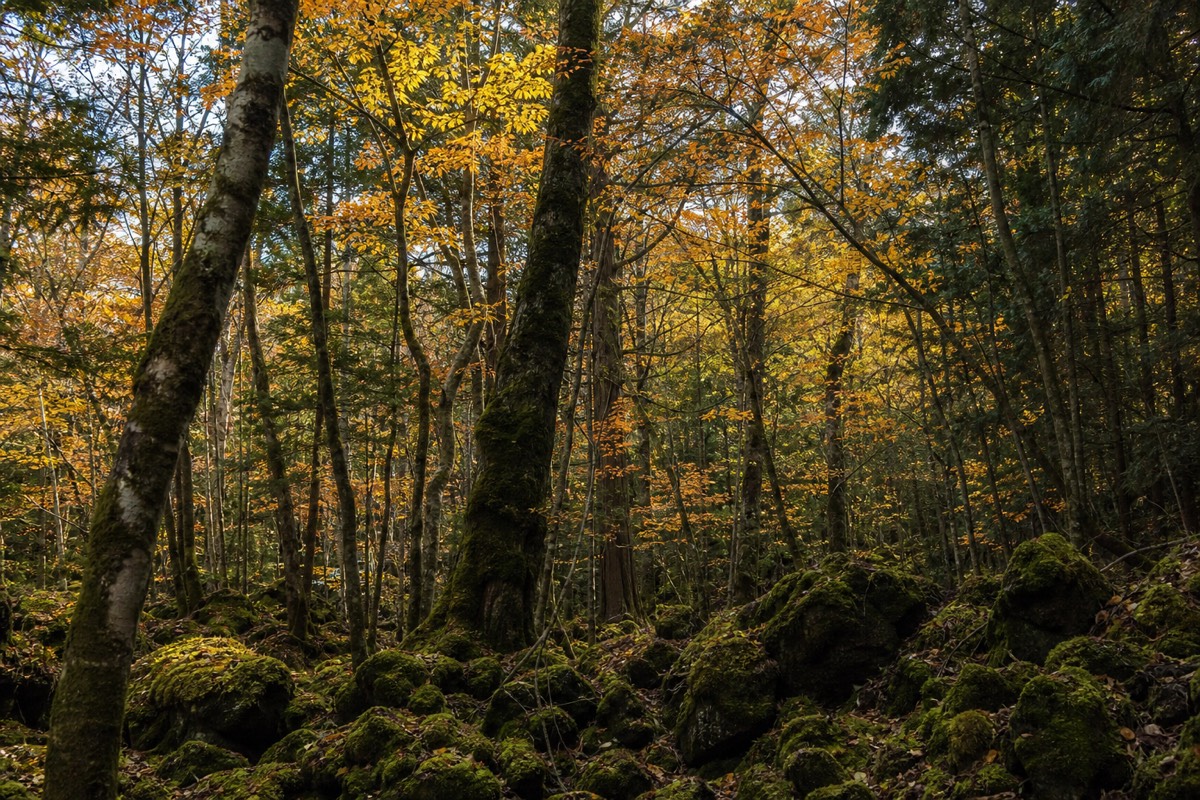
The practical consequence is that you should plan your turnaround time by the light on the ground, not by the sunset time on your phone.
What Makes The Terrain Difficult After Dark?
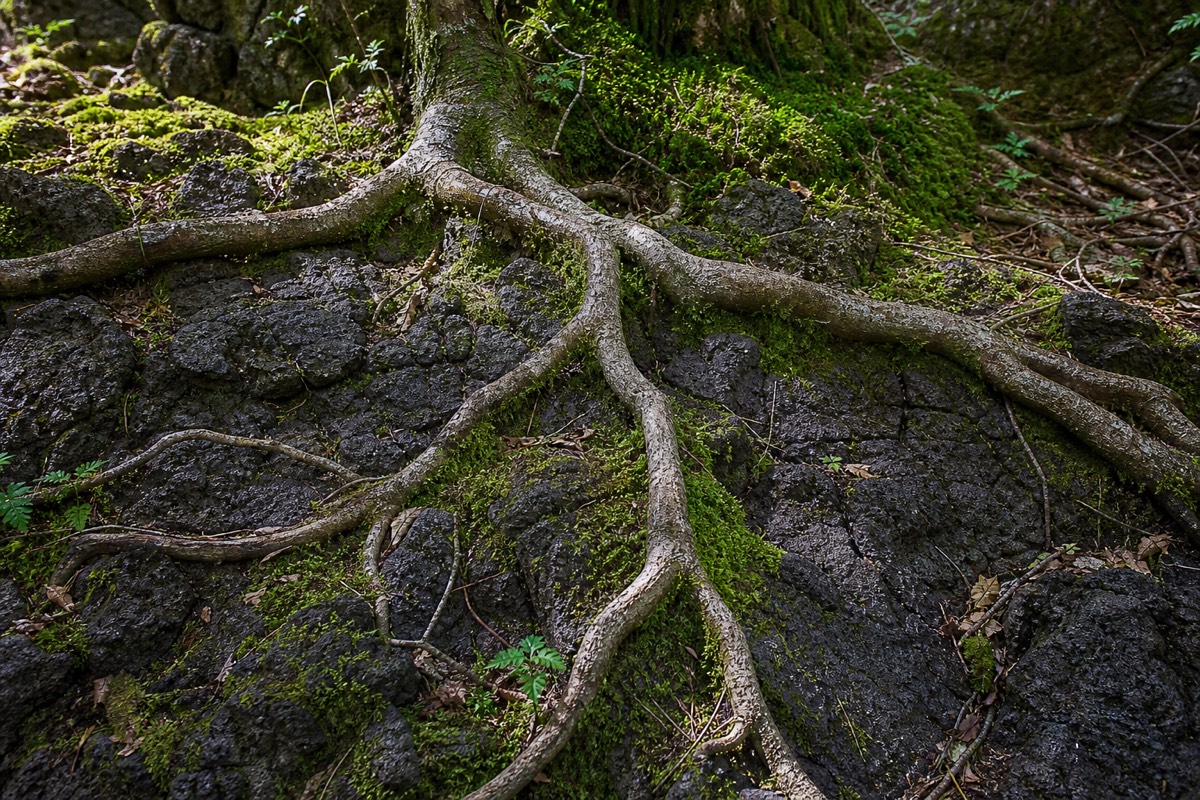
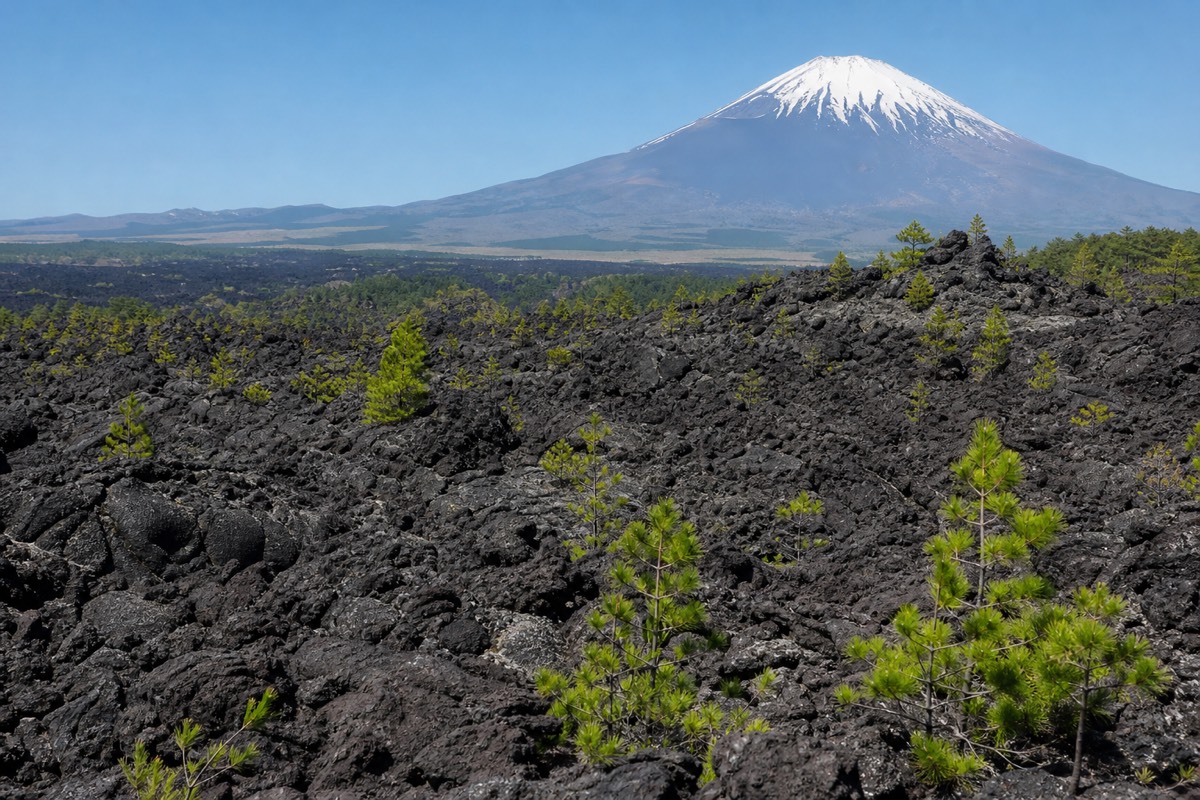
The floor is hardened lava rather than soil, so it is uneven by nature, with hollows, fissures and roots running horizontally across the surface instead of down into the ground. Moss covers much of it and gets slippery after rain. In daylight that adds up to a trail requiring shoes with grip and some attention. Without light it becomes an ankle hazard on every step.
Route-finding is the bigger problem. Marked trails are indicated with signs, rope guides and coloured tape, none of which is reflective or lit, and the forest gives you almost no natural landmarks to steer by even in full daylight because the terrain looks so similar in every direction. Cell coverage is patchy in parts of the forest, so calling for help is not a reliable fallback. Asiatic black bears live in the wider Mt. Fuji area of Yamanashi Prefecture as well, another reason the standard advice is to be out of the trees before dusk rather than in them.
What Time Do The Caves Close?
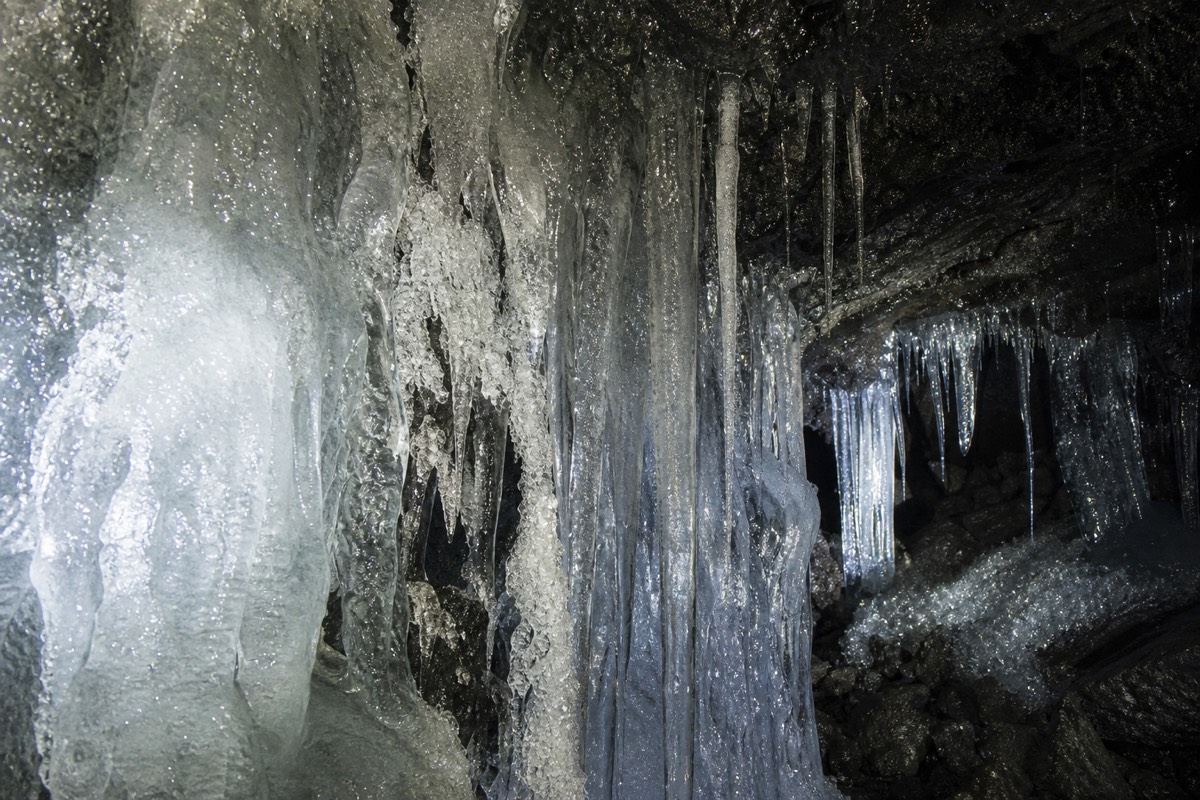
Narusawa Ice Cave and Fugaku Wind Cave both open at 9:00 and close in the late afternoon, with the exact closing time moving through the year. Roughly:
| Season | Typical hours |
|---|---|
| 1 April to mid-October | 9:00 to 17:00 |
| Mid-October to mid-November, and mid-March to end of March | 9:00 to 16:30 |
| Mid-November to mid-March | 9:00 to 16:00 |
Hours shift with season and weather and the caves can close over the New Year holidays, so check current times before building a day around them. Adult admission at Narusawa runs about ¥350, with a combined ticket covering both caves for around ¥600. Both caves are lit inside, but that lighting is on a schedule like everything else, and there is no evening access to either.
How Much Daylight Do You Actually Need?
Less than people expect, which is why the late-afternoon scramble is avoidable. A walk on the marked trails between the cave entrances takes one to two hours at a normal pace. Narusawa Ice Cave is a 15 to 20 minute walk-through once you are inside, Fugaku Wind Cave is about 15, and the two sit roughly 1.7 km apart on a mostly flat forest path, about a 20 minute walk. Getting out from Kawaguchiko Station takes around 30 minutes by road, and the same coming back.
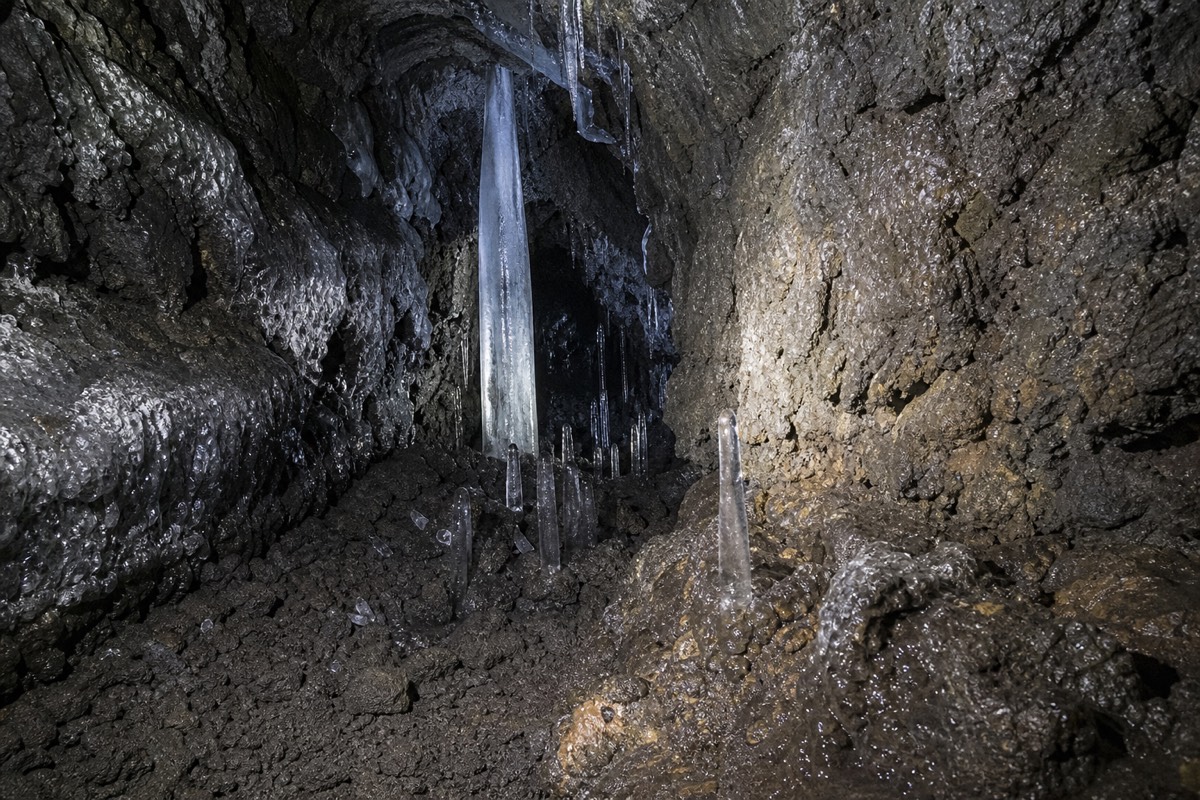
Add that up and a full forest-and-caves visit is a comfortable half day. Starting mid-morning leaves hours of margin. Starting after 14:00 in winter does not, since the caves will be closing while you are still on the trail.
When Should You Actually Go?
Morning, if the choice is yours. An early start means the caves are open when you arrive, the light under the canopy is at its best for a few hours, buses are still running, and you have a wide margin before the light starts going. It is also the quietest part of the day at both caves, before the Kawaguchiko day-trip traffic arrives.
Guided treks and cave day tours run in daylight for the same set of reasons, and a guide handles the turnaround timing for you along with the route. If you are visiting independently, the workable rule is to be back at the trailhead with real light left rather than the last of it.
What Is There To Do In The Area In The Evening?
Spend it by the lakes rather than under the trees. Kawaguchiko is the most developed of the Fuji Five Lakes, with accommodation, hot springs and places to eat around the shoreline, and it is where most visitors base themselves anyway. Clear evenings over the water are the reward for having walked the forest earlier, and it puts you fifteen minutes or so from the trailheads for another early start.
Compare Your Whole-Party Costs
Use the same currency, dates, people and inclusions for both totals. Add transport, cave tickets, meals and any extras before comparing.
A difference may buy guiding, equipment or transport. It is not a saving unless both options cover what your party wants.