Narusawa Ice Cave: Complete Visitor Guide
Narusawa Ice Cave is the kind of place that photographs almost as strangely as it feels: a passage of ice pillars and frost-coated basalt, formed inside a volcano, that never melts even in the height of a Japanese summer. It sits inside Aokigahara Forest at the base of Mt. Fuji and is open to anyone with a ticket, no booking or guide required.
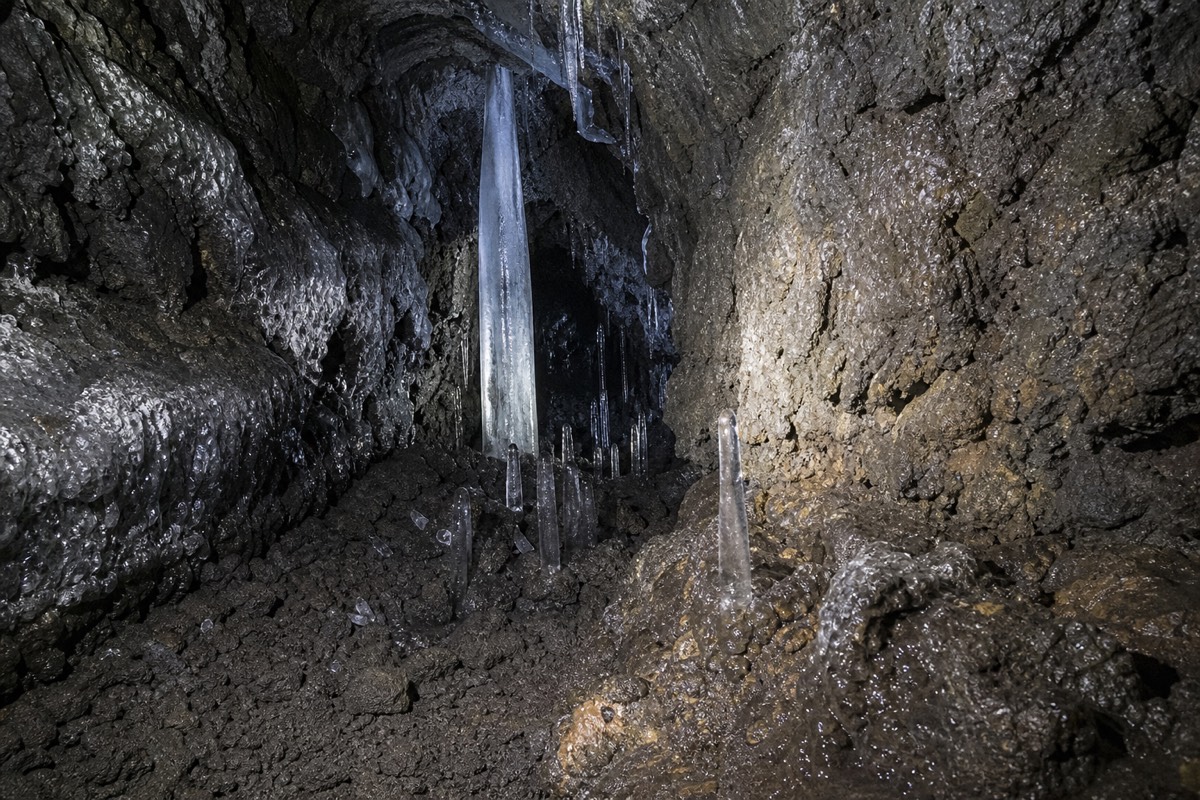
Of the three named lava-tube caves at the foot of Mt. Fuji, Narusawa Ice Cave is the most visited and, by search interest, the most asked about. Here is what it actually is and what a visit involves.
Buy a public cave ticket for a short visit. Choose the Tokyo itinerary for transport and multiple stops; do not confuse it with the separate equipped cave excursion.
10 hours: A private vehicle links the forest, Narusawa, Fugaku and lakeside stops in one day. English-speaking driver; central Tokyo pickup and return. Entrance fees, food and drinks are extra. Confirm your address and itinerary before booking.
Plan The Forest And Caves From Tokyo · Choose by time and starting pointNarusawa Ice Cave at a glance
Figures compiled from Wikipedia, the cave's official access page (mtfuji-cave.com) and current published entrance fees. Hours and prices can change seasonally, so confirm before you go.
What Is Narusawa Ice Cave?
Narusawa Ice Cave is a 156-metre lava tube in Narusawa Village, Yamanashi Prefecture, with two connected lobes, that stays naturally frozen year-round despite sitting well below Mt. Fuji's summit ice line. The passage varies between roughly 1.5 and 11 metres wide and 1 to 3.6 metres tall along its route, which is why parts of the walk require ducking or turning sideways through the tighter sections.
It is one of three named lava tubes clustered at the northern foot of Mt. Fuji, alongside Fugaku Wind Cave and the smaller Lake Saiko Bat Cave, all three formed by the same volcanic activity that shaped Aokigahara Forest above them.
How Did An Ice Cave Form Inside A Volcano?
Narusawa Ice Cave formed from an eruption of the nearby Mt. Nagao, and it stays frozen because the tube's particular shape traps cold air at its lowest points, insulated by thick surrounding rock, so the interior never warms enough for the ice to fully melt even in summer. It works something like a natural refrigerator: cold, dense air sinks into the lowest chambers and gets sealed there by the rock above, while the insulating basalt keeps outside heat from reaching in. The result is a cave that is coldest and iciest by late summer, when the previous winter's cold has had the longest time to settle, and gradually thaws back a little through spring.
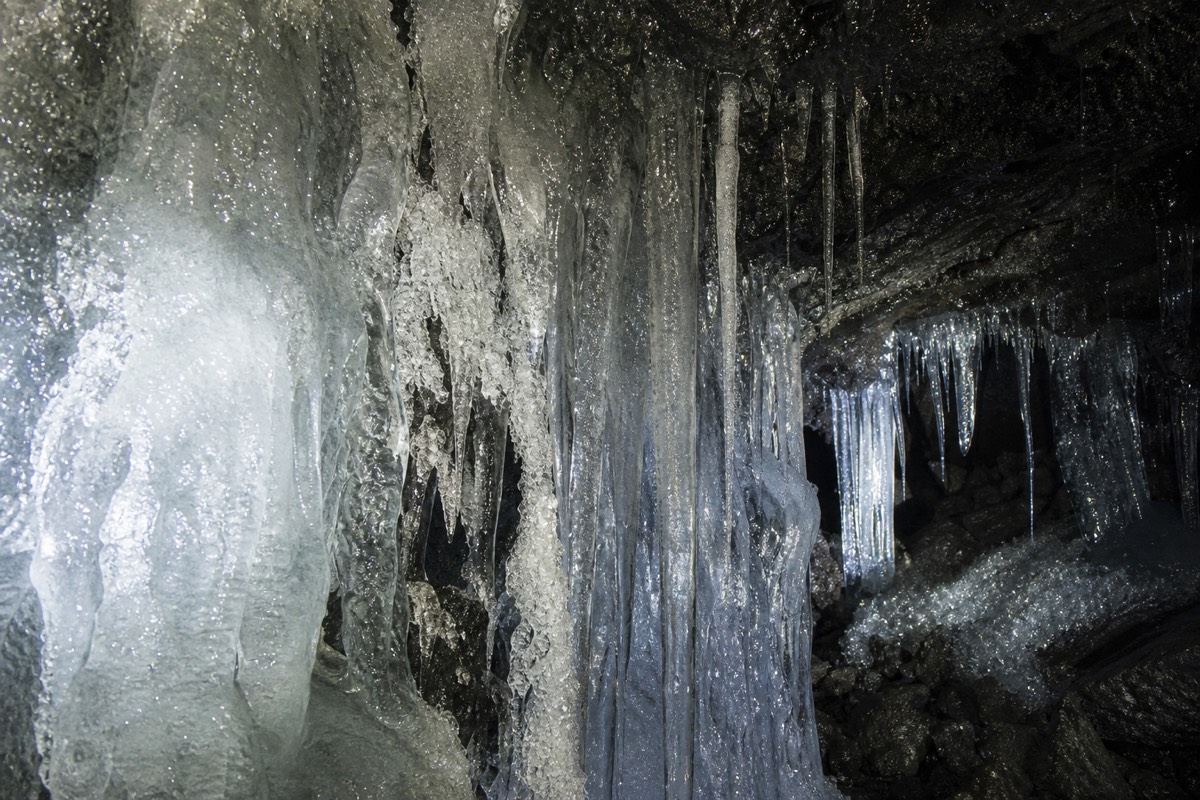
This is the same basic physical principle, cold air sinking and pooling in low, enclosed spaces, that shows up in mountain sinkholes and ice-trap caves elsewhere in the world, but it is unusual to find it this close to an active, famous volcano. Lava tubes form when the outer surface of a flowing lava stream cools and hardens while molten rock keeps moving underneath; once the eruption ends and the remaining lava drains out, it leaves a hollow tube behind. Narusawa's particular tube geometry, with lower chambers that trap the coldest air, is what turns an ordinary hollow lava tube into a functioning natural ice box.
What's Inside: What To Expect On A Visit
Visitors descend a staircase into a loop of narrow, low-ceilinged lava-tube passage, roughly 20 to 30 minutes round trip, passing ice pillars and frost-covered rock walls, with parts of the route dropping to about 21 metres below ground. Some stretches of ceiling run as low as under a metre, meaning you will be bending at the waist or turning sideways to pass through, and the steps and floor are frequently wet and can be slippery underfoot.
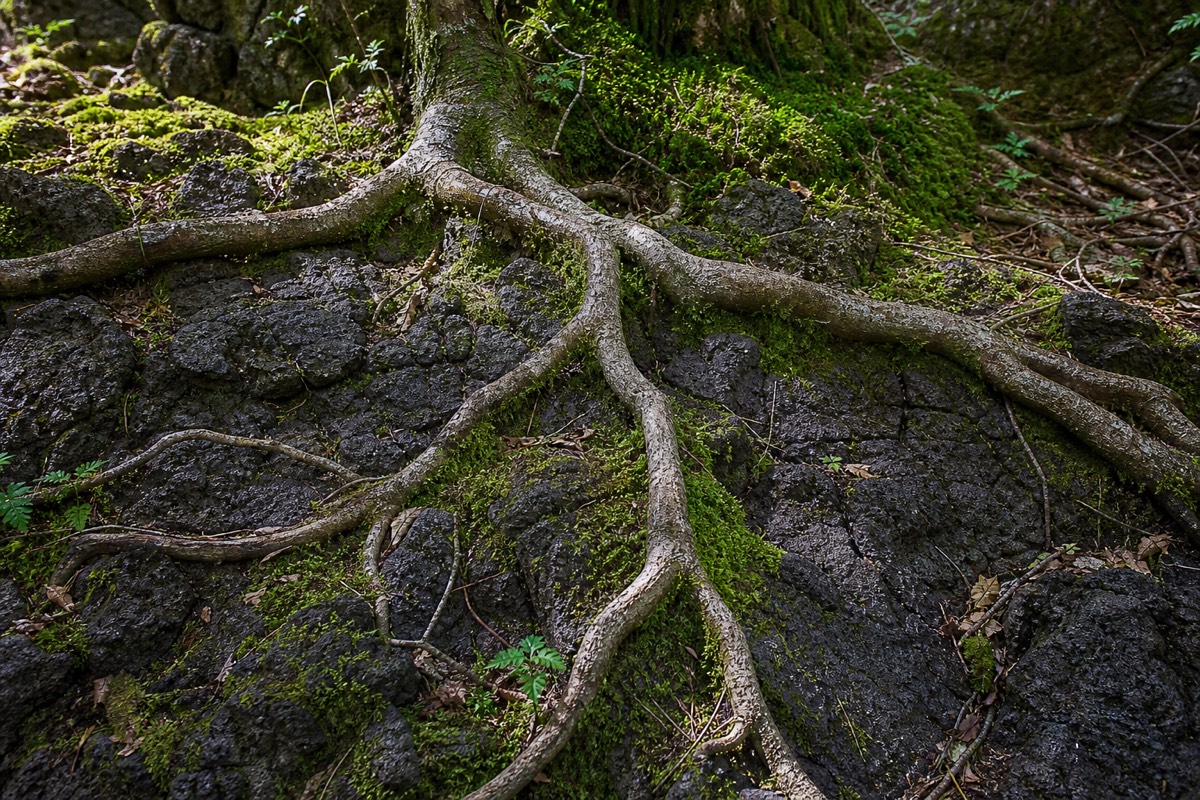
The main visual payoff is the ice itself: pillars, drips and frost formations building up along the tube walls, lit for visitors and best appreciated slowly rather than rushed through. It is not a large cave by international standards, but the combination of the cold, the low passages and the odd sensation of standing inside a volcano's plumbing rather than a limestone cavern is what makes it memorable.
How Long Does A Visit Take?
Most visitors spend 15 to 30 minutes inside the cave itself, depending on how much time they take over the ice formations and how busy it is. Add time for the walk from the parking area or bus stop and any queue at the entrance during peak season, and a realistic total visit runs closer to 45 minutes to an hour door to door.
Best Time Of Day And Year To Visit
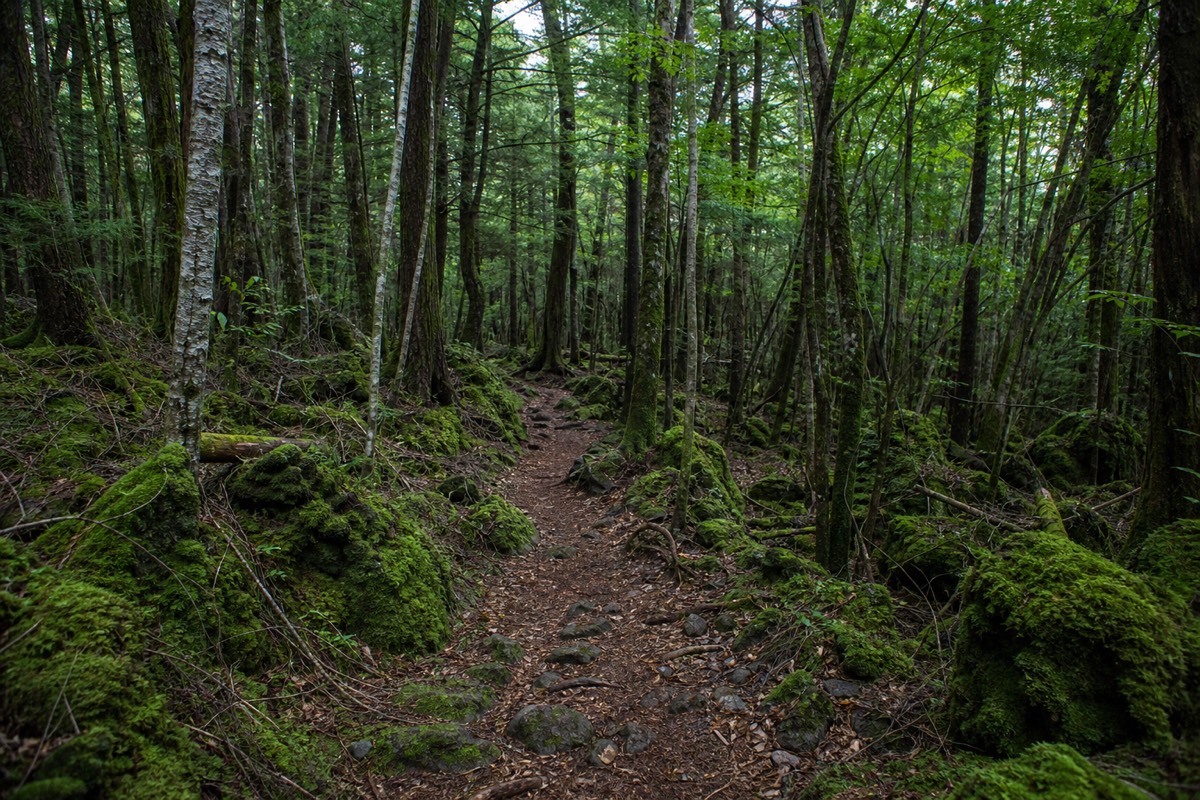
Early morning, shortly after the cave opens at 9:00 AM, is the quietest time to visit, since tour groups from Kawaguchiko and Tokyo tend to arrive from mid-morning onward. Late afternoon, in the hour or so before closing, is the next best window as the day-trip crowds thin out again. Weekends and Japanese public holidays are noticeably busier than weekdays at any time of day, since the cave sits within easy reach of both Fuji-area tourists and Tokyo day-trippers.
Seasonally, the cave itself barely changes since its temperature is a function of geology rather than weather, but the experience of stepping into it does. In summer the contrast between the heat outside and the cold inside is sharp enough to be genuinely startling, while in winter, when it is already cold outside, the drop feels far more gradual even though the ice is exactly as thick.
Photography Inside The Cave
Bring a phone or camera with a strong low-light mode, since the cave is dimly lit and a flash tends to wash out the ice formations rather than flatter them. The most photogenic sections are the ice pillars near the lower loop of the passage; a steady hand or a small travel tripod helps far more than raw camera specs, given how little ambient light there is. Because parts of the passage are narrow and require ducking, keep gear on a cross-body strap rather than in hand as you move through the tightest sections.
Is Narusawa Ice Cave Worth Visiting?
Yes, for the specific, unusual experience of standing inside a permanently frozen lava tube, which is not something most travellers get to do anywhere else, though it is a short visit rather than a half-day activity on its own. It rewards being paired with something else, whether that is a walk in the surrounding forest, a stop at Fugaku Wind Cave two minutes away, or a wider Fuji Five Lakes day.
The cave is at its most striking in summer, when the contrast between the heat outside and the near-freezing interior is sharpest. In winter the outside temperature is already cold, so the drop feels far less dramatic even though the cave itself is just as icy.
What Should You Wear?
Bring a jacket or fleece even in midsummer, since the interior sits close to freezing, and wear closed, sturdy shoes with real grip, because the floor and steps are routinely wet. A light layer you can carry outside and put on at the entrance works well, since the temperature swing between the parking area and the cave mouth is immediate. Given the low ceilings in places, loose scarves or anything that could catch on rock is worth leaving in the car.
Layering matters more here than at most attractions, because the temperature difference between outside and inside can be extreme, especially in July and August. Visitors who show up in shorts and a t-shirt for a hot Fuji Five Lakes day are the ones most likely to cut the cave visit short. A packable fleece or light jacket that takes up no room the rest of the day is the simplest fix, and gloves are worth considering if you plan to steady yourself on the handrails, since the metal stays cold to the touch.
| Item | Why |
|---|---|
| Jacket or fleece | Interior sits near freezing year-round |
| Grippy, closed shoes | Wet, uneven steps and floor |
| Small torch or phone light | Some sections are dimly lit |
| Free hands / small bag | Low passages require ducking and turning sideways |
Getting To Narusawa Ice Cave
Narusawa Ice Cave is about 30 minutes by road (bus, taxi or car) from Kawaguchiko Station, which is itself reached from Tokyo via the Chuo Line to Takao, then the Chuo Main Line to Otsuki, then the Fuji Kyuko Line. There is no direct rail connection to the cave, so the Kawaguchiko-to-cave leg needs a bus, taxi or rental car, or a guided tour that includes transport. The cave is open daily, typically 9:00 AM to 5:00 PM, though hours can shift seasonally, so check the current schedule before setting out.
Is It Accessible? How Difficult Is The Visit?
The cave involves stairs down and up, wet and uneven footing, and low passages that require bending or turning sideways, which makes it unsuitable for wheelchairs, strollers or anyone with significant mobility limitations. Most visitors in reasonable physical condition manage it comfortably, but it is not a level, easy walk in the way the surrounding forest trails are, and small children need close supervision on the wet steps.
The lowest sections of ceiling, under a metre in places, mean taller adults will be bending or crouching for short stretches, and anyone with knee or back issues that make bending difficult should factor that in before committing to the full loop. Handrails are present on the steepest sections, but the combination of moisture and stone steps means slow, deliberate footing matters more here than in most cave attractions built for casual tourism.
Common Mistakes First-Time Visitors Make
The most common issues are underestimating the cold, wearing the wrong shoes, and rushing the visit because it looks small from the entrance. Visitors who show up in summer clothing and sandals, expecting a quick walk-through similar to a mall or museum, are often the ones who find the cold uncomfortable and the wet steps genuinely slippery.
A second common mistake is treating Narusawa as a full activity on its own and building a whole afternoon around it. Given the cave takes well under an hour including travel, visitors who plan nothing else nearby often feel the day is thin. Pairing it with Fugaku Wind Cave two minutes away, or folding it into a broader forest walk, avoids that letdown.
Combining Narusawa Ice Cave With Fugaku Wind Cave
Fugaku Wind Cave sits about two minutes away by car, or an easy walk, and a combined ticket covering both caves typically costs less than paying for each separately. Because the two caves offer genuinely different experiences, ice versus open cool air, most visitors who make the trip out to Narusawa do both in the same visit. Our dedicated Fugaku Wind Cave guide covers what to expect there and how the two caves differ.
Frequently Asked Questions
Is Narusawa Ice Cave Worth Visiting?
Yes, for the specific experience of a naturally frozen lava tube, which is rare anywhere in the world. It is a short visit, so it works best paired with Fugaku Wind Cave nearby or a wider forest and lake day rather than as a standalone trip.
How Long Should You Spend At Narusawa Ice Cave?
Most visitors spend 15 to 30 minutes inside, with a realistic total visit of 45 minutes to an hour once you include getting there, parking or queuing, and the walk back out.
Where Is The Ice Cave Entrance?
Narusawa Ice Cave is in Narusawa Village, Yamanashi Prefecture, about 30 minutes by road from Kawaguchiko Station and roughly two minutes from Fugaku Wind Cave.
Do I Need To Book Narusawa Ice Cave In Advance?
No. Tickets are sold on-site, around ¥350 for an adult, with no advance booking or guide required for independent visitors.
Is Narusawa Ice Cave Cold Even In Summer?
Yes. The interior sits close to freezing year-round regardless of the season outside, which is exactly what makes it worth visiting on a hot day.
Compare Your Whole-Party Costs
Use the same currency, dates, people and inclusions for both totals. Add transport, cave tickets, meals and any extras before comparing.
A difference may buy guiding, equipment or transport. It is not a saving unless both options cover what your party wants.