The Forest (2016): What The Movie Gets Wrong About Aokigahara
The horror film that put Aokigahara in front of a global audience barely filmed there. Here is what the movie invented, what it borrowed, and what the forest is actually like.
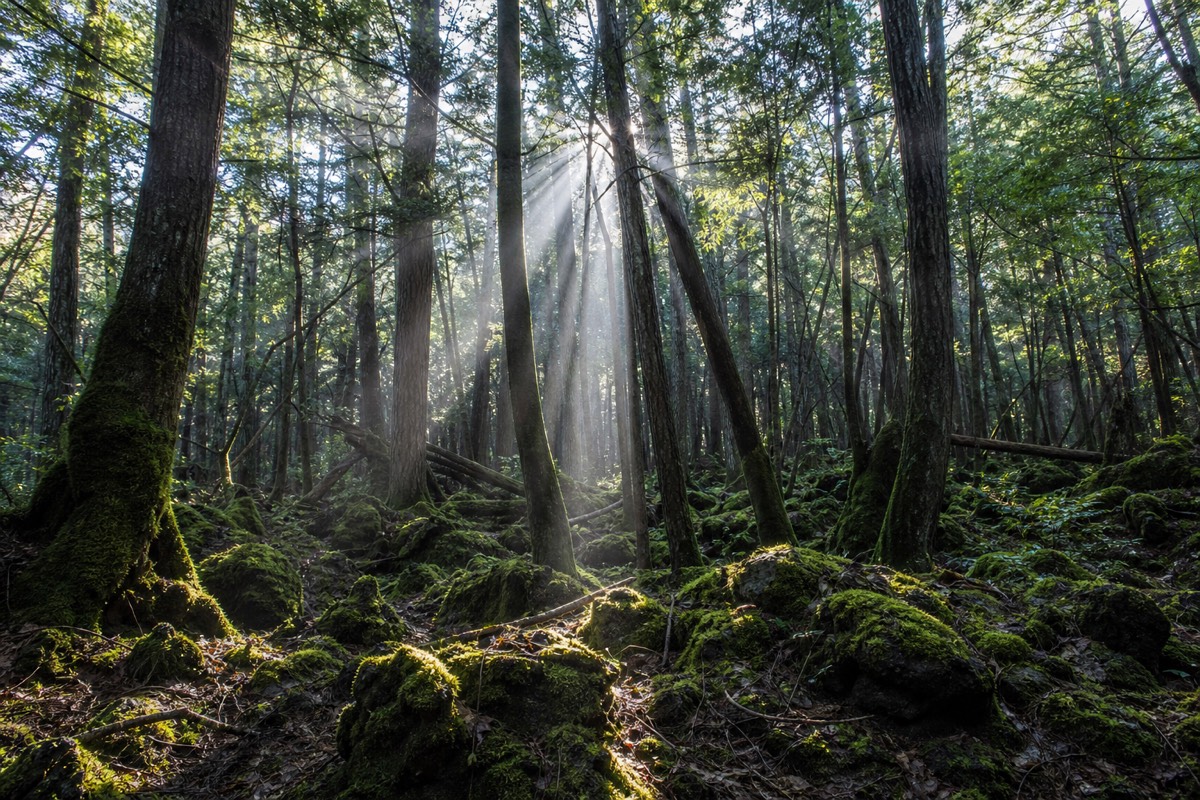
Nearly all of the forest you see on screen. Filming inside the real Aokigahara was not permitted, so the production shot its woods near Tara Mountain in Serbia, with interiors in Belgrade and on sound stages. The ice caves and the ranger station were built sets. Only a few days of the shoot took place in Japan at all.
There is no movie set to find in Aokigahara. A nature walk is a way to learn about the actual roots, lava and woodland.
3.5 hours: Geology commentary followed by a quieter stretch beneath the canopy. English guide; meet at NaturaBase opposite Fuji Lake Hotel and return there. Bottled water included; lunch extra.
Walk The Lava Forest With A Guide · Choose by time and starting pointThat single production fact explains most of the gap between the movie and the place. What follows is where the film's version came from, and what the forest at the base of Mt. Fuji is actually like.
Where Was The Forest Actually Filmed?
In Serbia, mostly. Producer David S. Goyer has described the problem plainly: the production could not get permission to shoot in Aokigahara, so the team went looking worldwide for a forest at a similar latitude and found one in Serbia. Principal photography began in May 2015 in Tokyo, then moved to the woods near Tara Mountain, with additional scenes shot in Belgrade and interiors at PFI Studios. Bad weather on the Serbian shoot pushed several scenes into a repurposed warehouse.
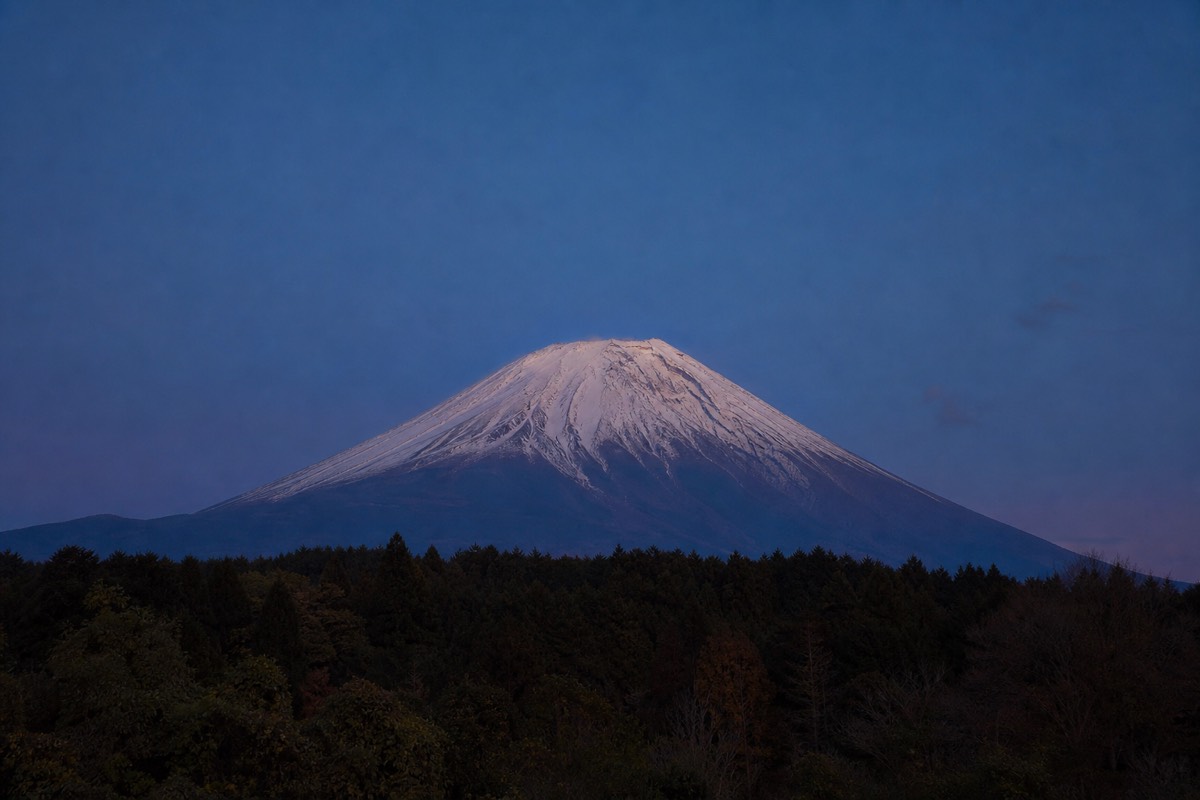
Director Jason Zada has said the shoot spent four days in Japan and that he built roughly twenty sets, including the ranger station the characters find in the woods and all of the ice caves, which were constructed on a stage. So when you watch the film's caves, you are not looking at a lava tube. You are looking at carpentry. The trees are Serbian, the caves are a build, and the mountain in the background is doing a job that Mt. Fuji does not do for anyone standing under the real canopy, where the tree cover blocks the view most of the time.
Did The Film Get Anything Right?
A few things, in outline. Aokigahara is a real forest in Yamanashi Prefecture at the northwestern base of Mt. Fuji, and it really is dense enough that leaving the marked paths is a bad idea. Yamanashi's own tourism guidance tells visitors not to stray from the official trails, which is close to what the film's characters are warned about, though the real reason is terrain rather than anything supernatural. Yūrei, the restless spirits the story leans on, are genuine Japanese folklore with a long literary and theatrical history. They are real as culture, not as a hazard.
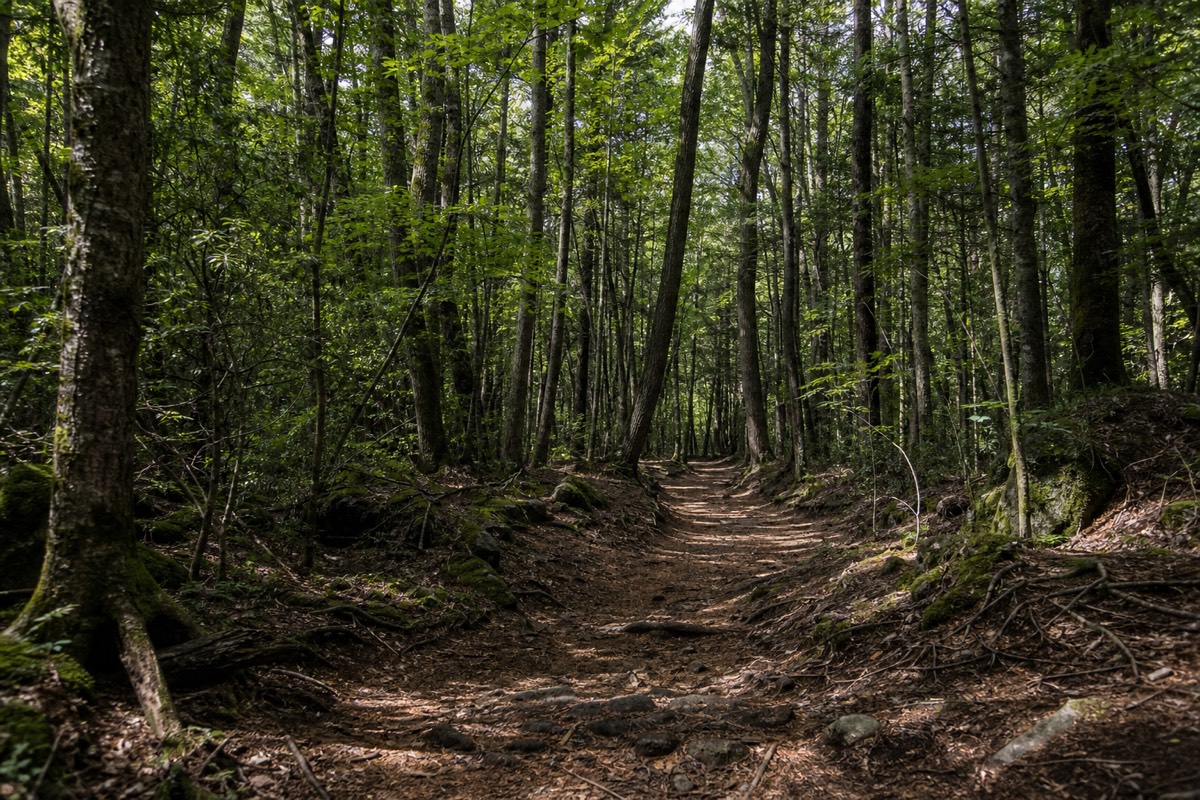
Beyond that, the geography is invented. There is no ranger station of the kind the film builds a whole sequence around, the cave layout is a set designer's, and the forest's internal distances and routes bear no relation to the real trail network.
What Is The Real Aokigahara Like?
Quieter and far more ordinary. The forest covers about 30 square kilometres of hardened lava laid down by Mt. Fuji's 864 CE eruption, roughly 100 km west of Tokyo and about 30 minutes by road from Kawaguchiko Station. Because the ground is rock rather than deep soil, tree roots spread horizontally across the surface instead of driving down, which is the single most photographed feature of the place and has nothing to do with the film.
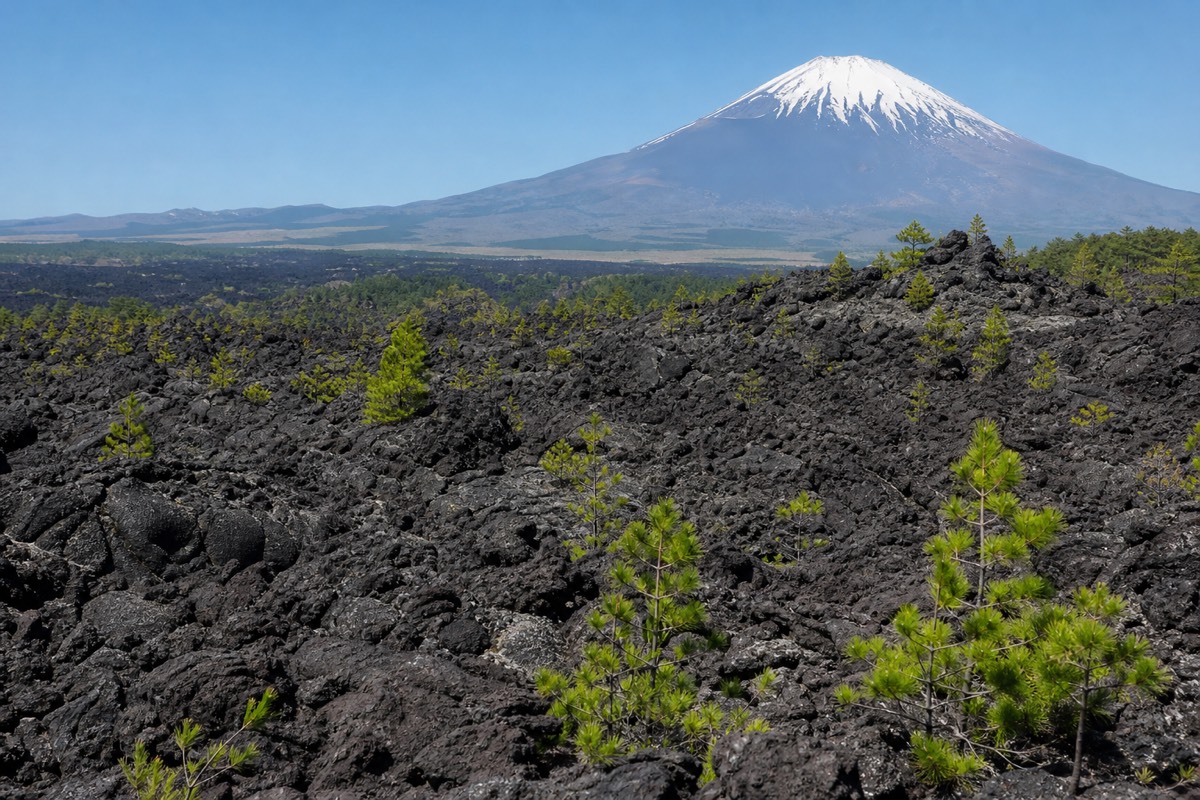
The silence people describe is geological. Porous lava absorbs sound, which is why a forest full of deer, foxes, rabbits and birds can feel muffled. Yamanashi's tourism board says exactly that on its own site. Designated hiking paths connect the three lava caves at the northern foot of the mountain: Narusawa Ice Cave, Fugaku Wind Cave and the Lake Saiko Bat Cave. Narusawa's visitor route runs about 156 metres, holds natural ice through summer, and costs a few hundred yen at the entrance. It is a ticketed tourist cave with a hard hat rack, not a set.
| On screen | On the ground |
|---|---|
| The forest, shot near Tara Mountain, Serbia | About 30 km² of hardened lava from Fuji's 864 CE eruption |
| Ice caves built on a sound stage | Narusawa Ice Cave, a real lava tube, roughly 156 m of visitor route |
| A ranger station deep in the woods | Signed trailheads, marked paths, a car park and cave ticket counters |
| Getting lost happens instantly and inexplicably | A real off-trail risk with an ordinary cause: uniform terrain, few landmarks |
| Something supernatural is driving events | No evidence of anything of the kind, ever |
Was The Movie Any Good?
Critics said no, loudly. The Forest holds a 10% critics score on Rotten Tomatoes from around 135 reviews, with an average rating of 4.1 out of 10, and a 34 on Metacritic. It still made about $37.6 million worldwide against a $10 million budget, which is why a film this poorly reviewed remains the first result many people find when they search for the forest.
The sharper criticism was not about scares. Reviewers objected to a horror plot built on a real place where people have died by suicide, and to how little the film's Japanese characters are given to do. Kevin Maher, writing in The Times, called it a dumb and dreary horror movie and flagged its racial insensitivities. That combination, weak film plus real subject, is a large part of why Yamanashi Prefecture would rather visitors arrived knowing the actual place.
What About The Sea Of Trees?
It is the other Aokigahara film people mean, and it did the same thing. Gus Van Sant's 2015 drama with Matthew McConaughey, Naomi Watts and Ken Watanabe is set in the forest, but principal photography began in Foxborough, Massachusetts, in July 2014, with scenes shot at Purgatory Chasm in nearby Sutton before the production moved to Japan that September. It was booed at its Cannes press screening and sits at 19% on Rotten Tomatoes.
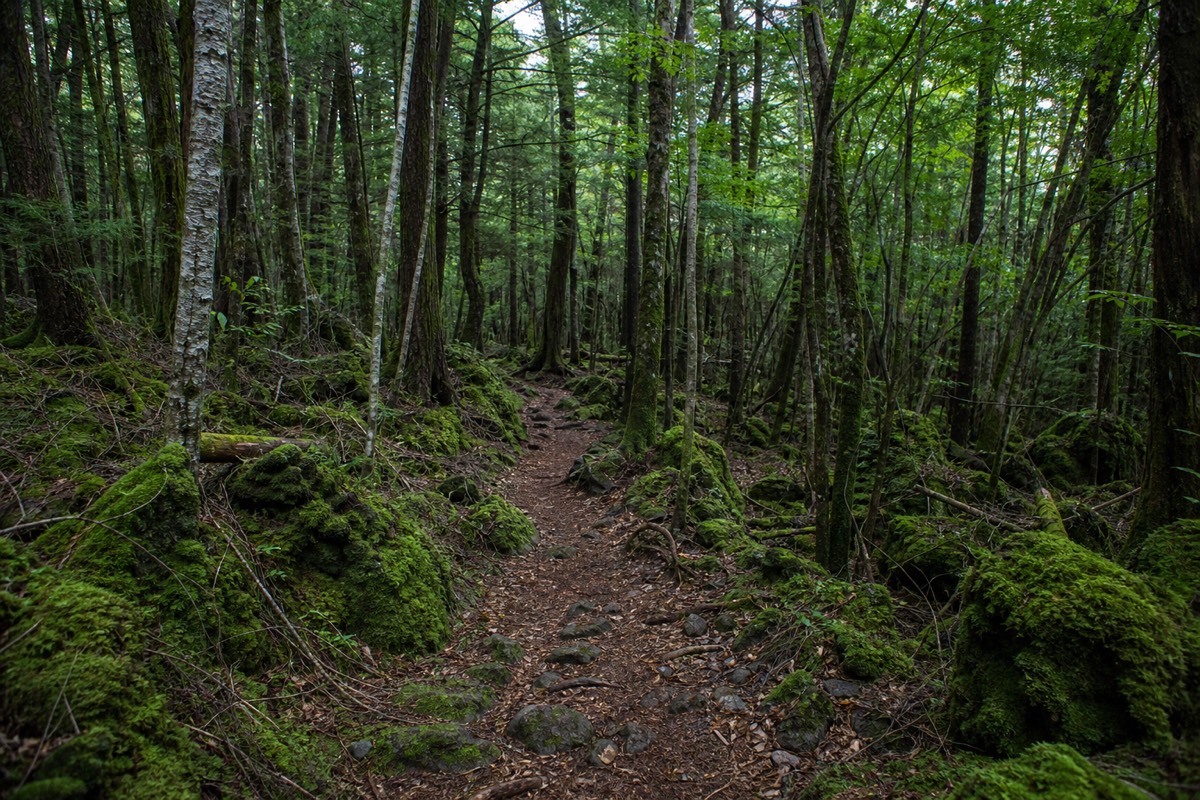
Two major films, two forests standing in for this one. Between Serbian pines and a Massachusetts state reservation, most people who think they have seen Aokigahara on screen have seen something else entirely.
Can You Visit The Film's Locations?
Not really, because most of them were never places. There is no ranger station to find and the cave interiors were built on a stage. What you can do is walk the actual forest the films were pointing at, which is open, free and served by marked trails from the cave entrances near Lake Saiko. Guided treks run through the marked route network with a local guide who can explain the lava geology, the horizontal roots and the cave systems, and cave-focused day tours from Tokyo fold Narusawa Ice Cave into the same trip. The version you get is a moss-covered volcanic forest with birds in it. Better than the set, and considerably better lit.
Compare Your Whole-Party Costs
Use the same currency, dates, people and inclusions for both totals. Add transport, cave tickets, meals and any extras before comparing.
A difference may buy guiding, equipment or transport. It is not a saving unless both options cover what your party wants.