Aokigahara Myths Vs Facts
Aokigahara attracts bad information the way few places do. Some of it is honest confusion, some of it is copied from other travel sites without anyone checking, and a fair amount originated in fiction. Below are the claims that come up most, each set against what the prefecture, the historians and the geology actually say.
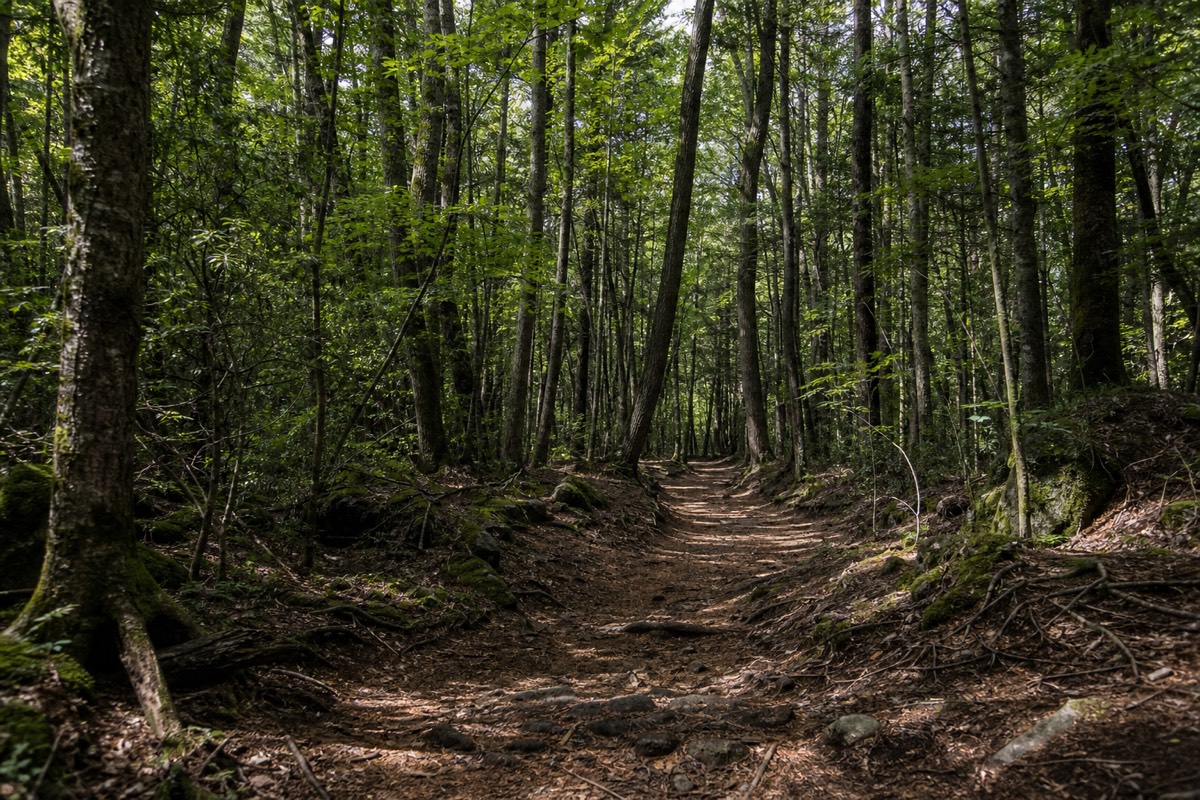
A useful pattern shows up when you check these claims one at a time. The myths are not random. Almost all of them work by taking something real, a real property of volcanic rock, a real category of Japanese folklore, a real tragedy, and stretching it several sizes past what the evidence supports. Understanding the stretch is more interesting than either believing or dismissing the claims wholesale.
A nature-focused walk makes the geology and ecology the reason to visit. Folklore is not proof of a hazard or a booking benefit.
3.5 hours: Geology commentary followed by a quieter stretch beneath the canopy. English guide; meet at NaturaBase opposite Fuji Lake Hotel and return there. Bottled water included; lunch extra.
Walk The Lava Forest With A Guide · Choose by time and starting pointMyth: Compasses Stop Working In Aokigahara
Fact: they do not, and the regional tourism authority says so on its own website. Yamanashi's official guidance calls this "a common misconception that compasses are rendered useless by the rich deposits of magnetic iron in the area's volcanic soil", and states that compasses used in the forest "will behave as expected when held at normal height".
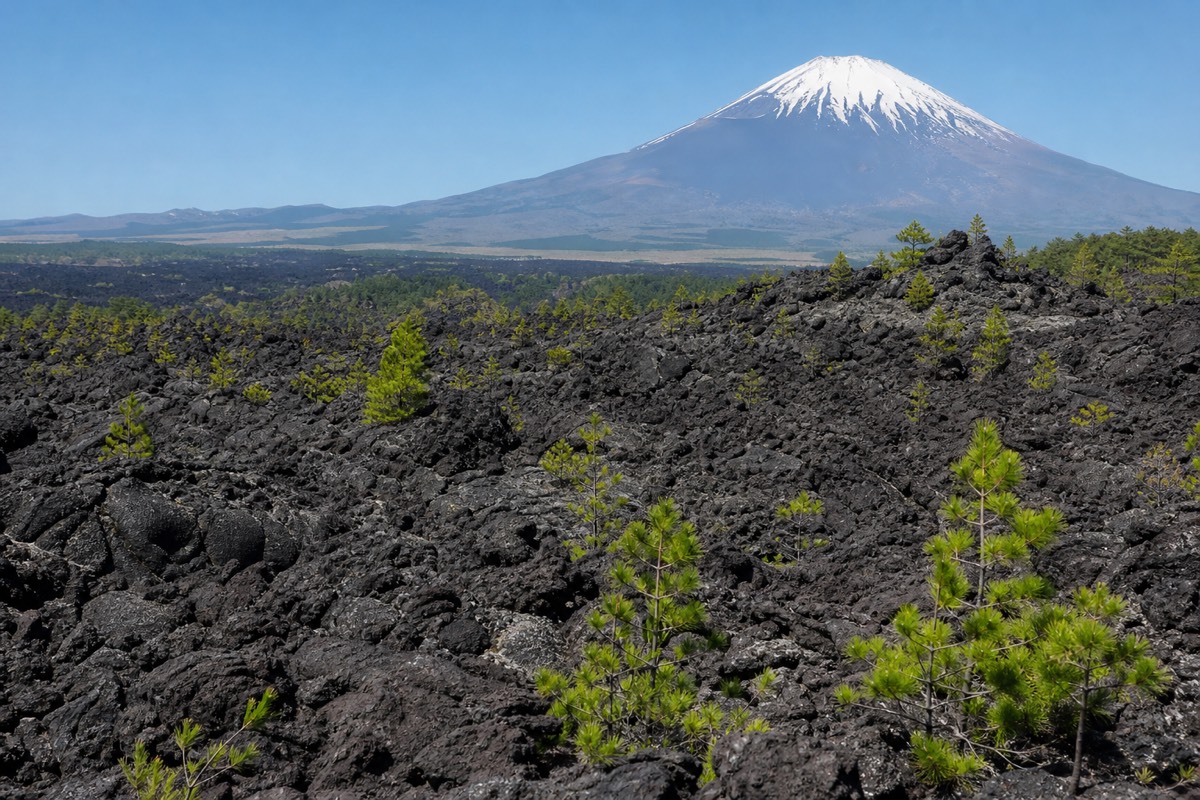
The real geology behind the myth is narrow. Iron-rich basalt cools while recording the magnetic field around it, and in some volcanic areas worldwide that recorded magnetism is strong enough to nudge a needle held directly against exposed rock. The effect drops off sharply with distance. A compass at chest height, which is how anyone actually uses one, is far too far away for it to register. GPS works normally too.
What makes this myth worth singling out is not the physics but the publishing. Travel sites still state it as fact, in the present tense, on pages that rank well, while the prefecture that administers the forest has a public correction sitting in plain sight. That gap is a decent illustration of how the rest of this list came to exist: not through conspiracy, just through everyone copying the previous page. The site has a fuller answer on whether compasses stop working in Aokigahara, including where the kernel of real science sits.
Myth: Once You Go In, You Cannot Find Your Way Out
Fact: designated hiking paths run through the forest and connect the three lava caves, and they are signed, roped and regularly walked. The genuine navigational difficulty is real but specific: it applies off-trail, and it is caused by how visually uniform the terrain is, not by anything interfering with your equipment.
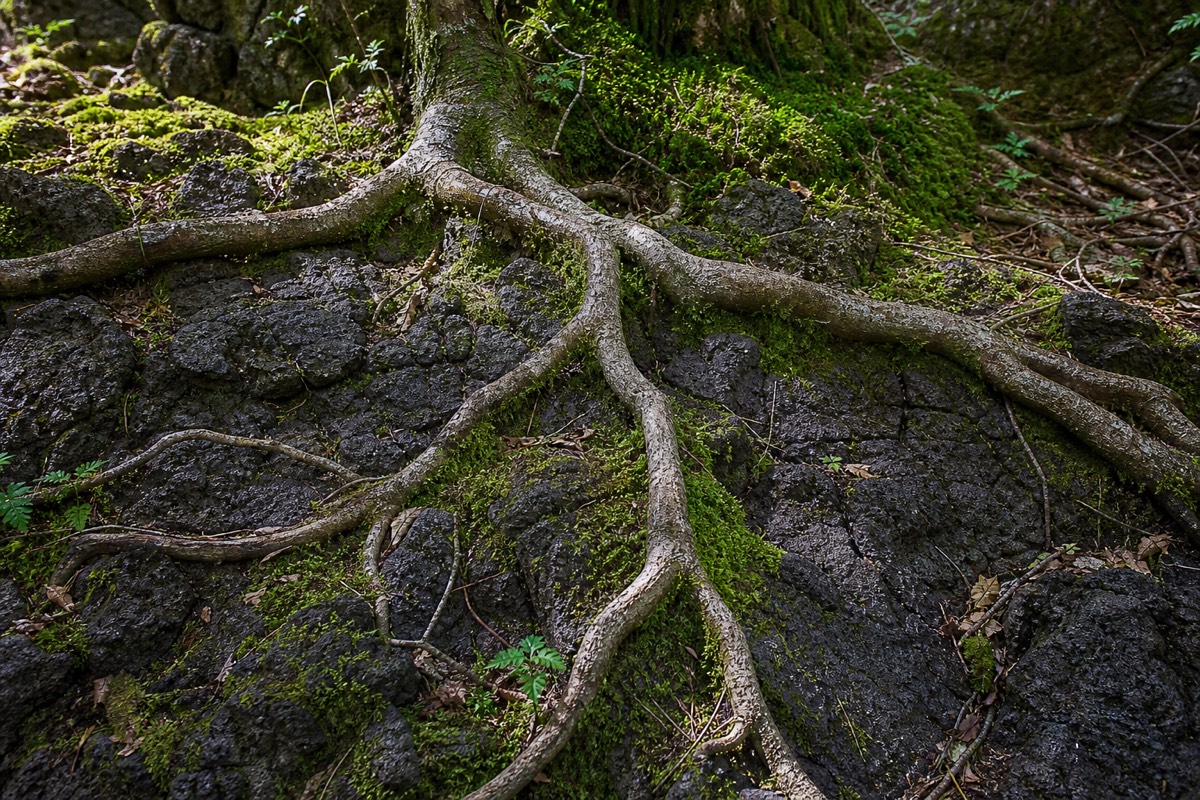
Step off a marked path and the forest looks close to identical in every direction. Even canopy, moss over lava, no distant peak, no stream, no change in vegetation to fix on. Most hikers orient themselves by landmarks without noticing they are doing it, and Aokigahara supplies almost none. That is a genuine reason to take the stay-on-the-path guidance seriously, and it is also exactly why the prefecture publishes it.
On the marked network itself, none of this applies in a way that should worry an ordinary visitor. People walk between the Narusawa Ice Cave and the Fugaku Wind Cave without incident all day, every day. Phone signal is genuinely patchy in stretches of the deeper forest, which is a real practical consideration and a good argument for downloading an offline map, but patchy coverage is a logistics problem rather than a mystery.
Myth: The Forest Is Haunted By Yurei
Fact: yurei are a real and deep category in Japanese folklore, but the specific claim that Aokigahara carries a documented centuries-old haunting tradition is much harder to source than the internet suggests. The pages asserting it are, for the most part, ghost-content sites citing other ghost-content sites.
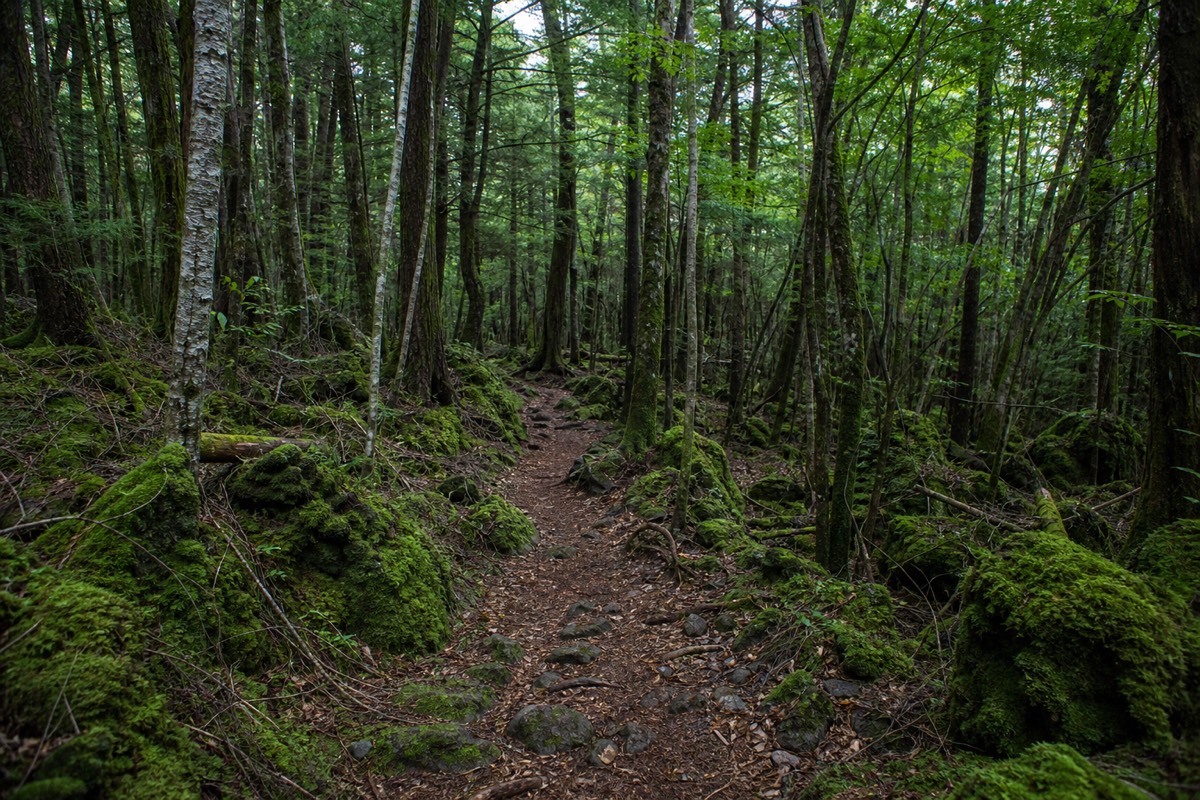
The broader tradition is not in doubt. Japanese ghost lore is extensively studied, yurei are spirits bound to the world by strong emotion, and forests function in that tradition as boundary places between the living and the dead. Applying that framework to a dense, quiet, low-light forest is a natural move for a storyteller, and people have made it.
What is missing is the specificity. There is no well-attested body of pre-modern Aokigahara ghost lore comparable to the documented legends attached to many named sites in Japan. The forest's modern notoriety, by contrast, has a clear and recent origin in a 1960 novel. When a claim about ancient hauntings and a claim about a mid-century bestseller compete to explain the same reputation, and only one of them has a publication date, that is not a difficult call.
Myth: Aokigahara Was A Site Of Ubasute, Abandoning The Elderly To Die
Fact: this fails twice. Historians widely doubt that ubasute was ever a common practice rather than a legend, and separately, nothing connects it to this forest. The Kodansha Illustrated Encyclopedia of Japan states that ubasute "is the subject of legend, but does not seem ever to have been a common custom".
The folklorist Kunio Yanagita concluded that the ubasute motif reached Japan through Buddhist story tradition from India rather than describing Japanese social behaviour. Scholars point to the absence of the evidence you would expect if the practice had been widespread: no archaeological record, no contemporary administrative documentation. What ubasute demonstrably is, is a durable moral parable, best known through the Narayama story and the films made from it, which is a category of thing quite different from a historical custom.
The second failure is simpler. Even readers who want to keep the practice in play cannot connect it to Aokigahara, because the forest is only about 1,160 years old and no source ties the story to this ground. The result is a myth resting on a disputed custom, attached to an unevidenced location, invoked to explain spirits that in turn explain a reputation with a documented literary origin. Each link is weak, and the chain is only ever presented whole.
Myth: It Is The World's Most Haunted Forest
Fact: this is a listicle format rather than a claim. "Most haunted" rankings are not measurements of anything; they are traffic products, assembled from other rankings, and Aokigahara appears near the top of them because its name is already familiar, which is circular.
The mechanism is easy to watch in action. A page needs ten haunted forests. The writer searches for haunted forests, finds Aokigahara on nine existing lists, includes it, and adds a paragraph synthesised from those lists. Nothing was verified at any stage, and the new page becomes a source for the next one. Repeat for a decade and a novel's ending has hardened into a global ranking.
The practical consequence for a visitor is that these pages are useless for planning. They will not tell you that the caves keep opening hours, that the marked paths connect them, that the ice cave holds ice through summer because of the shape of the lava tube, or that a jacket is a good idea in August. They are written to be read, not used.
Myth: The 2017 Video Showed What The Forest Is Like
Fact: it showed a visitor behaving badly. The video published on 31 December 2017 caused a global backlash, was taken down by its creator, and led to real consequences for him and to changes in how YouTube handled monetisation, including manual review of its premium advertising tier and higher entry requirements for its partner programme.
What it did not do is describe the place. Aokigahara did not change in 2017. The marked paths, the caves, the signage and the patrols were all in place before the video and remain in place after it, and the prefecture's request to media to stop using the sensational label predates the incident too. Details of what the footage contained are not repeated here, and the person filmed should not have been.
The lasting effect was on attention rather than on the forest. The episode pushed an enormous wave of search interest toward a place that had spent years trying to reduce exactly that, which is a large part of why local guidance now leads so firmly with hiking, caves and ecology. If the video is why the forest is on your radar at all, that is worth sitting with for a second.
Myth: The Silence Is Supernatural
Fact: the silence is real and it is geological. Porous lava absorbs sound instead of reflecting it, and the forest's unusually even canopy blocks most wind, so the ordinary background noise of an outdoor space largely disappears. Yamanashi's own guidance attributes the quiet and calm atmosphere to the porous lava.
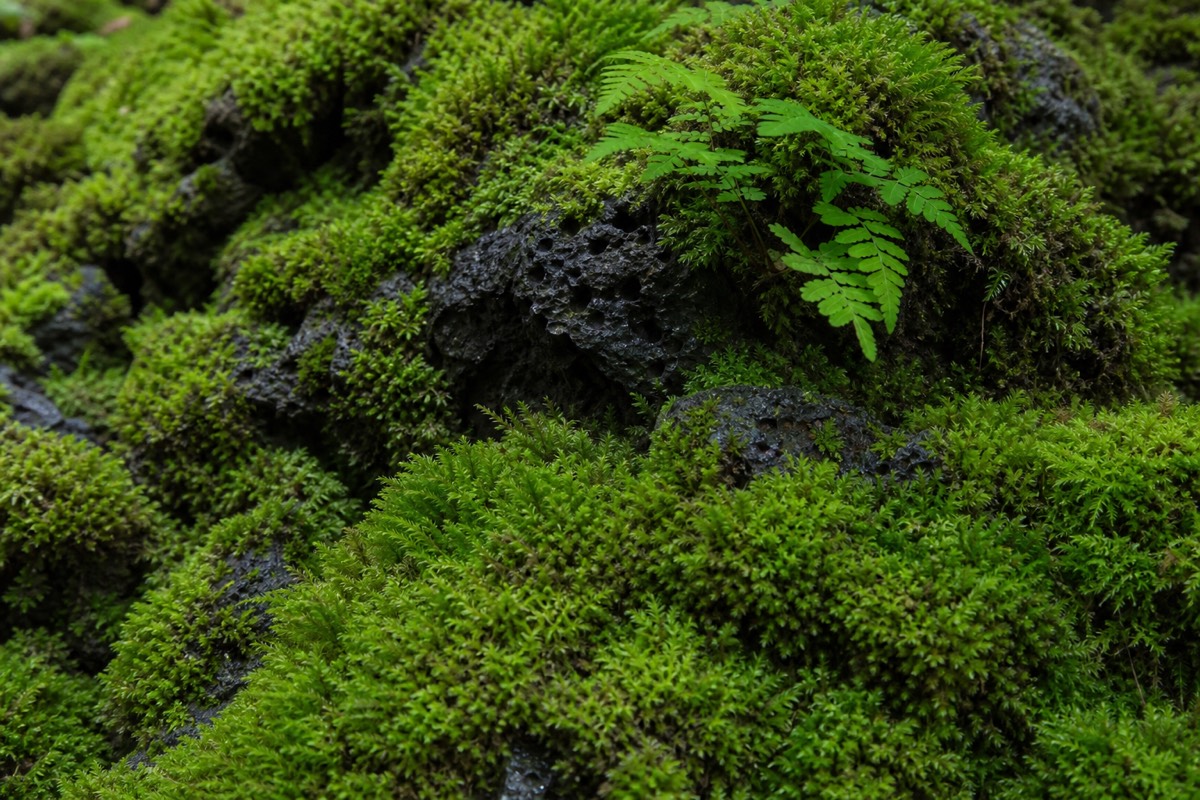
This is the myth most worth converting rather than discarding, because the underlying observation is accurate. Visitors do report the silence as the most striking thing about the place. Footsteps land flat. Clap inside one of the lava tubes and the sound does not travel out. That is basalt full of gas pockets doing what an acoustic panel does, on a scale of 30 square kilometres.
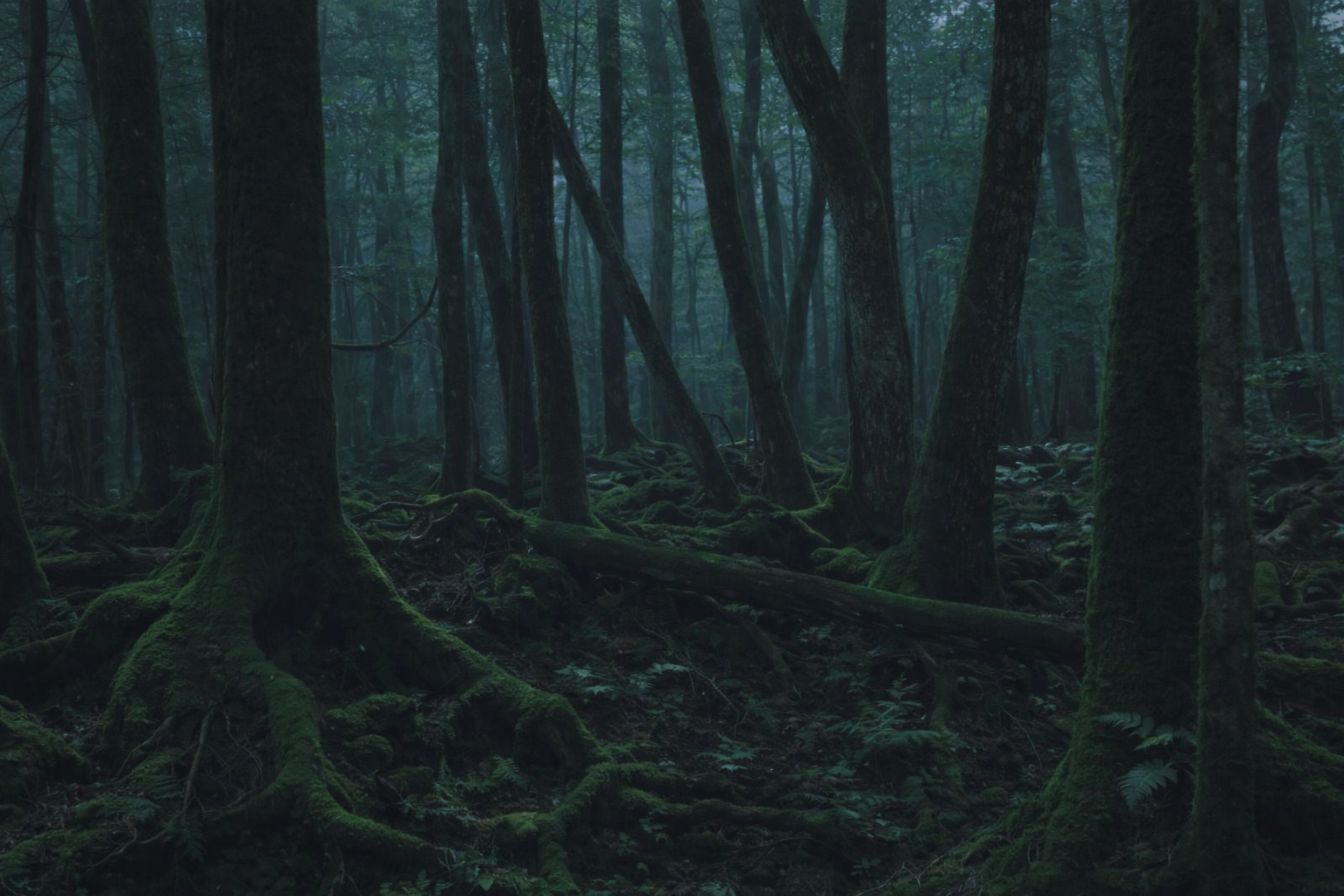
The same lava explains the rest of what you notice. Roots run sideways over the rock because they cannot get into it, which caps how tall any tree can grow before it topples, which is why the canopy stays so level that the forest earned the name Jukai, Sea of Trees. Silence, root shape, canopy height and the caves underfoot are four consequences of one eruption in 864 CE. That is a more satisfying explanation than a ghost, and it has the benefit of being checkable.
Myth: The Forest Is Off-limits, Or It Is Wrong To Go At All
Fact: Aokigahara is part of a national park and Yamanashi Prefecture actively promotes visiting it. The official guidance describes designated hiking paths connecting three lava caves and asks only that people stay on them. Ordinary tourism is the framing local authorities want, not the one they are trying to discourage.
Some visitors arrive with the opposite worry to the one this page has been correcting: not that the forest is dangerous, but that going there is ghoulish by definition. That instinct is decent, and it is also aimed at the wrong target. The prefecture's whole strategy has been to move attention away from the sensational framing and toward hiking, cave visits, birdwatching, photography and guided walks led by trained naturalists. Every visitor who comes for the trees and the geology is part of the outcome that strategy is after.
Where the instinct is right is in conduct. Filming inside the forest is restricted. The paths are marked for a reason and straying from them is asked against. And the one behaviour that genuinely is inappropriate, going in to look for anything connected to the reputation, is also the one that puts you off-trail, interferes with the people who patrol these paths seriously, and intrudes on families who deserve to be left alone. Come for the forest, walk where the signs point, and there is nothing to feel awkward about.
The Claims, Side By Side
| Myth | What is actually true |
|---|---|
| Compasses stop working here | Yamanashi's tourism guidance calls this a common misconception; a compass held at normal height behaves as expected, and GPS works normally. |
| You cannot find your way out | Designated, signed paths connect the three lava caves. Off-trail navigation is genuinely hard because the terrain looks uniform, not because of interference. |
| The forest is haunted by yurei | Yurei are real folklore, but a specific, documented pre-modern Aokigahara haunting tradition is not well sourced. The modern reputation dates to a 1960 novel. |
| It was an ubasute site | Historians doubt ubasute was ever a common practice, and nothing ties the legend to this forest. |
| World's most haunted forest | A listicle ranking, not a measurement. Such lists are assembled from other lists. |
| The 2017 video showed the real forest | It showed one visitor's conduct. It changed platform policy, not the place, which had marked paths, patrols and signage before and after. |
| The silence is supernatural | Porous lava absorbs sound and the even canopy blocks wind. The quiet is a property of the rock. |
| Nothing about the forest is unusual | Also wrong. It is a roughly 1,160-year-old forest growing on bare lava, with three lava-tube caves and a self-levelling canopy. The real facts are the strange ones. |
Why So Many Of These Claims Survive
Because each one started from something true and got stretched. Iron in volcanic rock is real. Yurei are real. The difficulty of off-trail navigation is real. The silence is real, and so are the deaths. Every myth on this list is a real thing enlarged past the point where the evidence follows it.
That pattern is also the reason the corrections are worth making rather than simply ignoring the noise. Telling a visitor that everything they have heard is nonsense is both unkind and inaccurate, and it leaves them with nothing. Telling them which part was true, and where the exaggeration entered, gives them a forest they can actually look at: lava with roots crawling over it, a canopy that stays level because the ground will not let it do otherwise, three caves formed by the same eruption, and a quiet with a physical cause.
If you want the fuller version of how the reputation itself was assembled, from the 1960 novel through to the present-day official framing, the site's page on the truth behind the "suicide forest" label covers it properly, including the crisis-support contacts that belong with that subject. For planning a visit, the practical guides on the caves, the trails and getting there from Tokyo are more use than anything on this page.