Aokigahara Forest Travel Guide
Aokigahara sits where Mt. Fuji's ninth-century lava flows cooled into thirty square kilometres of forest, packed tight enough that the trees cut the wind and the porous ground swallows sound. Most visitors give it half a day: a walk through the trees, a stop inside one of the lava-tube caves, maybe a gap in the canopy that frames Fuji itself. This guide covers what an actual visit involves, from the rock under your feet to which parts you can see without a guide.
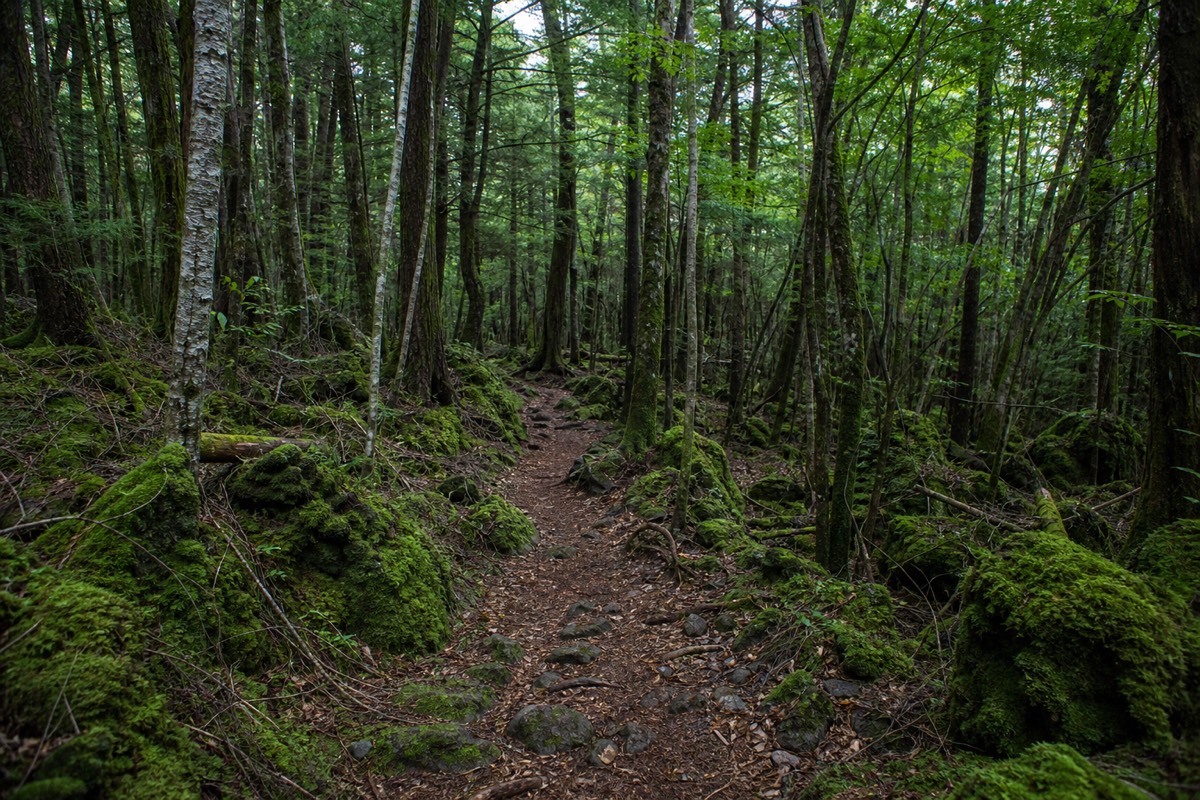
Aokigahara gets folded into a lot of Mt. Fuji itineraries as an afterthought, a stop on the way between Lake Kawaguchiko and the Fifth Station. That undersells it. The forest is its own destination: a place shaped entirely by one eruption, where the ecology, the geology and the quiet all trace back to the same event. Here is what it actually is, how people visit it, and how to plan the time, section by section, from the geology under your boots to the logistics of getting there and back in a single day.
Start with the nature walk for the forest itself, the equipped cave excursion for an underground activity, or private transport for a full day from Tokyo.
3.5 hours: Geology commentary followed by a quieter stretch beneath the canopy. English guide; meet at NaturaBase opposite Fuji Lake Hotel and return there. Bottled water included; lunch extra.
Walk The Lava Forest With A Guide · Choose by time and starting pointAokigahara Forest at a glance
Figures are approximate, compiled from japan.travel (JNTO), Wikipedia and the site's own verified trip details. Always confirm current transit times before you travel.
What Is Aokigahara Forest?
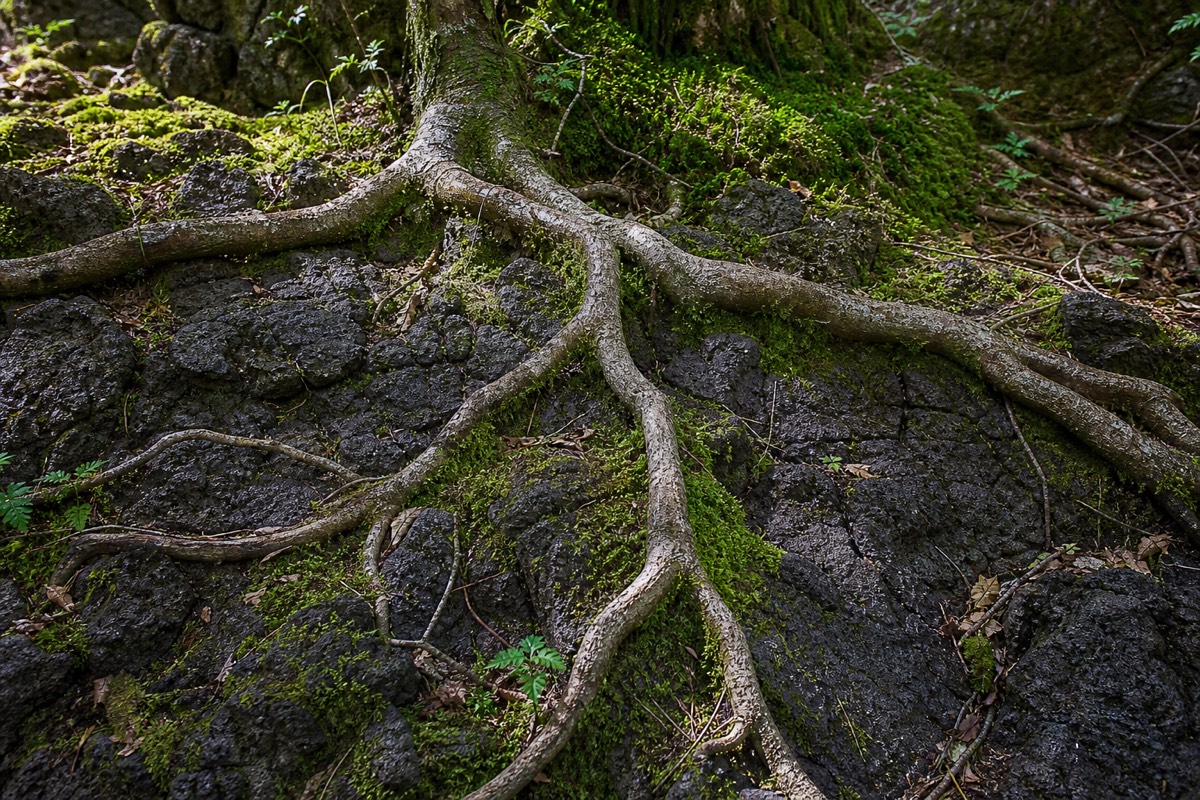
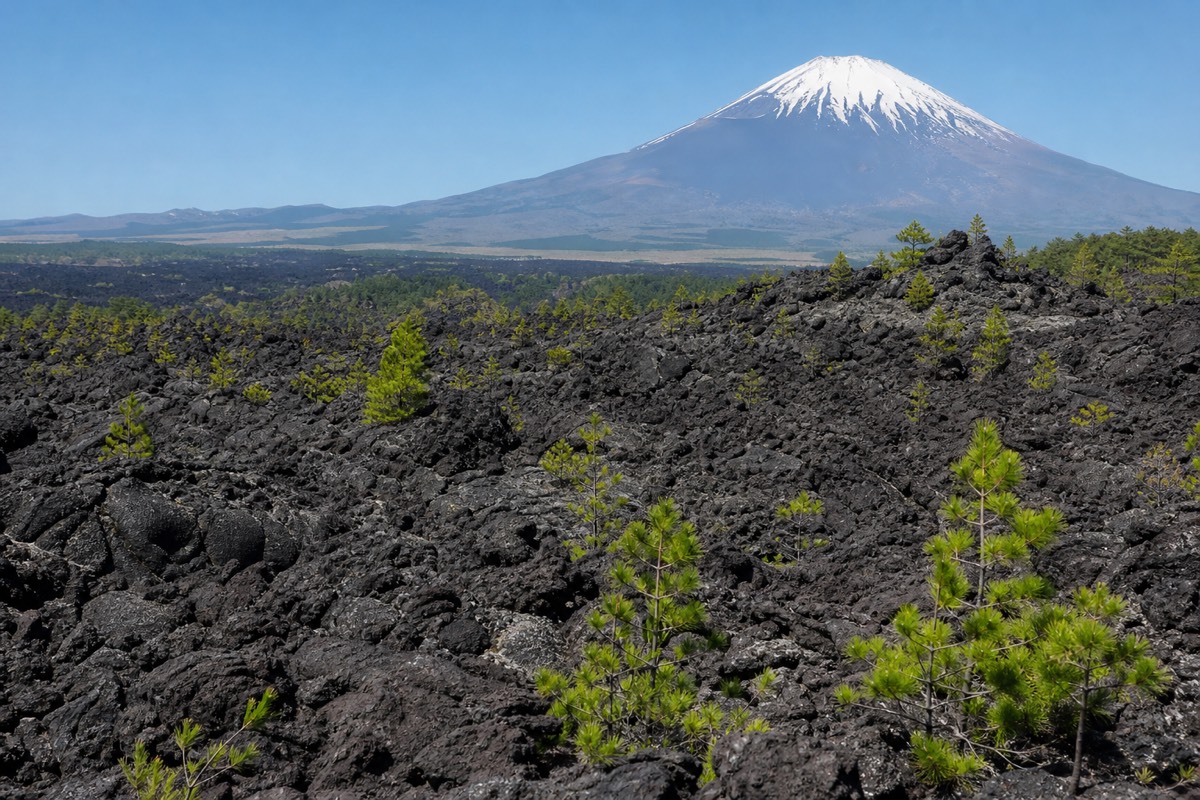
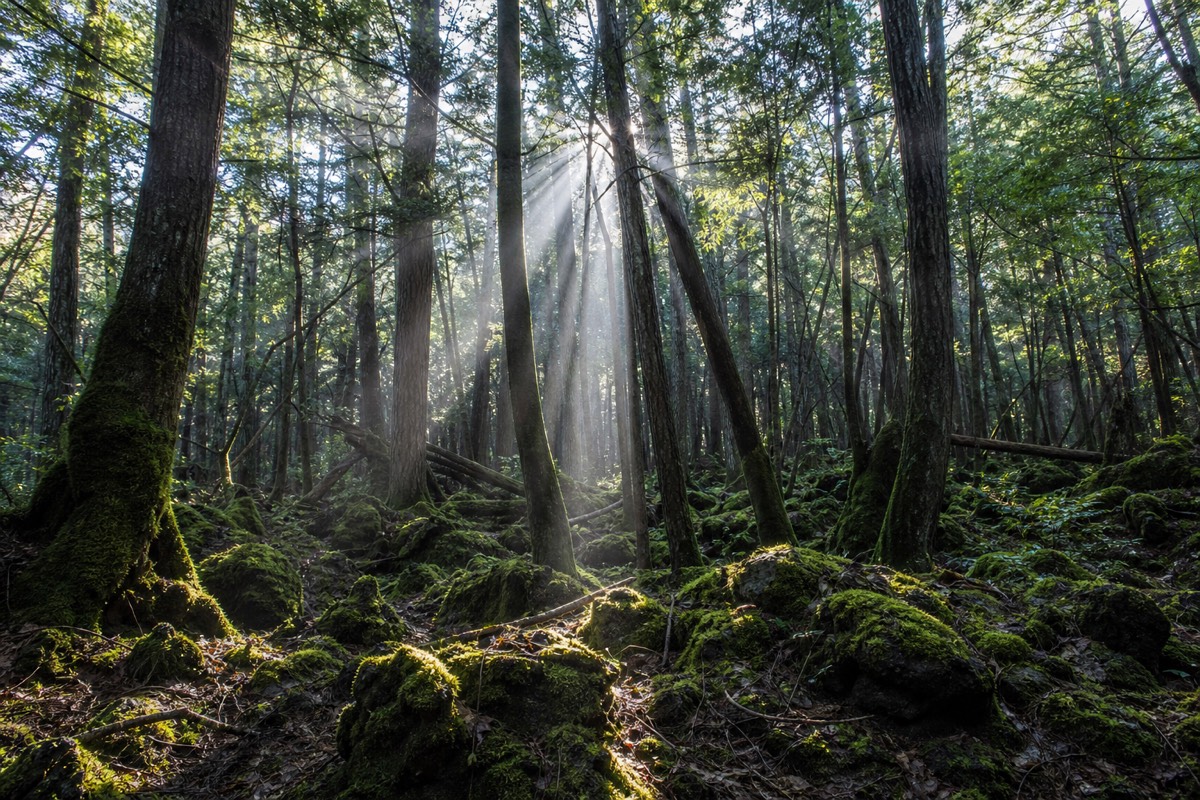
Aokigahara is a 30-square-kilometre forest on the northwestern base of Mt. Fuji, grown almost entirely on lava rock from the mountain's 864 CE Jōgan eruption. Its Japanese name is Jukai, "Sea of Trees," a description that gets more literal the longer you look at it: from a viewpoint above, the canopy really does roll like water. Beneath the trees, the ground is hardened lava rather than soil, which is why tree roots here spread sideways across the rock surface instead of digging down into it. That same porous lava absorbs sound, which is the real, physical reason the forest feels so quiet rather than any supernatural explanation.
The forest sits in Yamanashi Prefecture at roughly 900 to 1,300 metres above sea level, bordered by three of the Fuji Five Lakes: Sai, Shoji and Motosu. It is a living, working part of the Fuji-Hakone-Izu National Park, not a fenced attraction, so parts of it are open to the public year-round and parts of it are genuinely not meant to be explored off-trail.
Where Is Aokigahara And How Do You Get There?
Aokigahara is about 100 km west of Tokyo. The standard public-transport route is the Chuo Line to Takao, a change to the Chuo Main Line as far as Otsuki, then the Fuji Kyuko Line to Kawaguchiko Station, followed by around 30 minutes by road to the forest itself. Most international visitors fly into Haneda (HND) and connect from there.
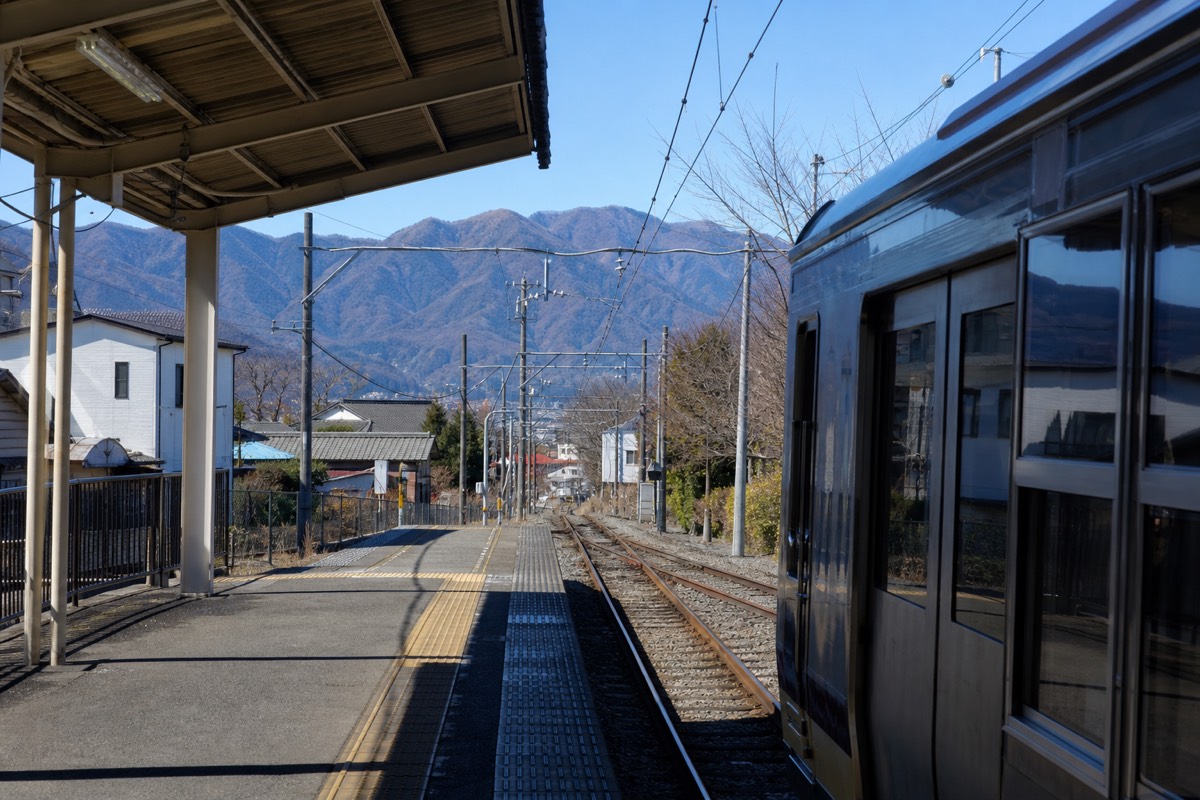
Kawaguchiko is the practical gateway town for the whole area: hotels, bus connections and the tour pickup points cluster around its station. Independent travellers doing the full public-transport route should expect the Tokyo-to-Kawaguchiko leg alone to run something over an hour once the train changes are accounted for, then a further 20 to 30 minutes to reach the forest entrances near the caves. Guided tours from Tokyo or Kawaguchiko fold all of that into one pickup, which is the main reason people choose them over stitching the trains together.
| Leg | Route | Notes |
|---|---|---|
| Tokyo to Takao | JR Chuo Line | First leg from central Tokyo |
| Takao to Otsuki | JR Chuo Main Line | Change at Takao |
| Otsuki to Kawaguchiko | Fuji Kyuko Line | Change at Otsuki |
| Kawaguchiko to the forest | Bus, taxi or tour vehicle | Around 30 minutes by road |
How Does A Guided Visit To Aokigahara Actually Work?
A typical guided visit runs three to four hours and combines a walk through marked forest trails with at least one stop inside a lava-tube cave, led by a guide who handles routing, permits and cave-entry logistics. Some tours stay focused on the forest and caves alone; others fold Aokigahara into a longer Mt. Fuji day that also takes in a Fuji Five Lakes viewpoint or a private BBQ stop.
Group format varies more than people expect. Small-group tours mix you with other travellers, usually capped at a modest maximum for safety and pacing inside the caves, while private tours give you a dedicated driver or guide and let you adjust the pace or stops on the day. Neither format is objectively better; small-group tours tend to cost less per person, while private tours give more control over timing, which matters if you are also trying to work around train connections or a flight later that day.
What differs most between operators is depth of cave access. Some tours walk you to the well-known show caves, Narusawa Ice Cave and Fugaku Wind Cave, both of which you could technically enter on your own with a ticket. Others advertise entry to sections of lava tube that are not part of the standard public route, sold as exclusive or permit-based access. If getting inside a genuinely hidden cave matters to you, read the tour description closely rather than assuming every "ice cave tour" means the same thing. A small-group trek, by contrast, usually spends most of its time on the surface trails, moving at a relaxed pace through the root-and-lava terrain with stops for the geology and the forest's ecology.
What Will You Actually See In The Forest?
Expect uneven volcanic rock underfoot, tree roots spreading horizontally across the lava surface instead of down into it, thick moss on anything that holds still, and a stillness that most first-time visitors describe as the most noticeable thing about the place. The forest is dense conifer and broadleaf mixed woodland, and because the lava field is only about 1,150 years old in geological terms, the whole ecosystem reads as young: shallow soil pockets, exposed rock, plants that have had to adapt to growing on stone rather than earth.
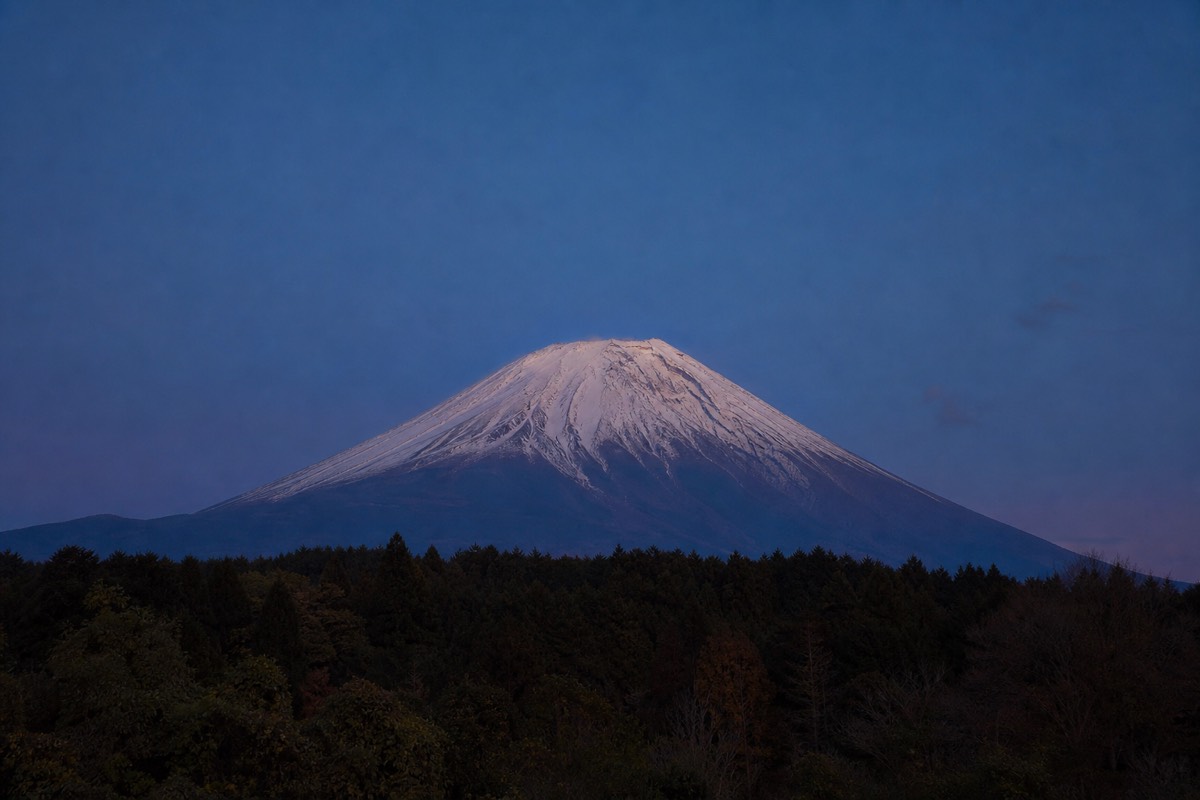
On a clear day, breaks in the canopy near the forest's edges can frame Mt. Fuji itself, though the deep interior of the forest is thick enough that you should not plan a visit around a guaranteed Fuji photo. The main draw is the forest floor and the geology, not the mountain view, which is better handled at a dedicated Fuji viewpoint.
What Makes Aokigahara's Geology Different From An Ordinary Forest?
Most forests grow on soil built up over thousands of years; Aokigahara grows directly on hardened lava rock barely over a millennium old, which changes how everything above it behaves. Regular soil holds water and lets roots dig deep for stability and nutrients. Lava rock does neither well, so Aokigahara's trees have adapted by spreading their root systems sideways across the surface, gripping the rock rather than anchoring into it. Walk the trails and you will see roots running along the top of the ground like exposed cabling, sometimes climbing over boulders rather than growing around them.
The same young, rocky ground shapes what lives there. Soil pockets are shallow and inconsistent, so plant life clusters wherever leaf litter and moss have had time to build up a workable layer, while bare lava sits exposed just a few steps away. Wildlife includes birds adapted to dense conifer cover, along with the kind of small mammals and insects typical of a temperate Japanese woodland; nothing here is dangerous or unusual by Japanese forest standards, but guides on trekking tours often point out details, like a particular root formation or a lava tube opening at the surface, that are easy to miss walking on your own.
The Three Lava Caves Beneath Aokigahara
Three named lava-tube caves sit at the northern foot of Mt. Fuji within or beside the forest: Narusawa Ice Cave, Fugaku Wind Cave and the Lake Saiko Bat Cave. All three formed from the same volcanic activity that created the forest above them, and each has a distinct character.
Narusawa Ice Cave is a 156-metre lava tube that stays naturally frozen year-round, ice formations and all, because of how the tube's shape traps cold air. Fugaku Wind Cave, the largest of the three, runs about 201 metres and stays cool and airy rather than icy, a genuine "wind cave" in the literal sense. The Lake Saiko Bat Cave, over by its namesake lake, is the smallest of the three by search interest and the least visited of the trio. Both Narusawa and Fugaku have their own dedicated guides on this site if you want the full detail on formation, what to wear, and how to combine a visit to both in one afternoon.
All three caves are ticketed, ground-level attractions with parking, marked walkways and posted hours, not the kind of technical caving that needs specialist equipment. Narusawa and Fugaku sit close enough together, about two minutes apart by car, that most visitors see both in one stop; the Bat Cave, being over by a different lake, usually needs its own separate trip if you want to add it to the day.
Is Forest Bathing Part Of An Aokigahara Visit?
Shinrin-yoku, "forest bathing," is a real, government-backed Japanese practice, coined by Japan's Ministry of Agriculture, Forestry and Fisheries in 1982, and Aokigahara's density and quiet make it a natural fit for it even though it is not the practice's birthplace. The idea is simple: slow, unhurried time spent in a forest, absorbing the surroundings rather than hiking through them at pace. Research from Japanese institutions, including work by Dr. Qing Li at Nippon Medical School, has linked time in forests like this to measurable drops in stress markers and blood pressure, which is part of why the practice has since spread well beyond Japan.
You do not need a dedicated "forest bathing tour" to get something like this experience at Aokigahara. Guides on standard trekking tours often build in quiet stretches deliberately, because the forest's own silence does most of the work. If a slow, contemplative pace matters more to you than covering ground or seeing a cave, say so when booking; guides can usually adjust the walk accordingly.
Best Time Of Year To Visit Aokigahara
Spring and autumn give the clearest weather and the most comfortable walking temperatures; summer is greener but hazier, and winter is coldest but often the clearest for a Fuji view from the forest's edges. The caves stay a near-constant cool temperature year-round regardless of season, since that is a function of the lava tube's geology rather than the weather outside.
| Season | Conditions | Good for |
|---|---|---|
| Spring (Apr-May) | Mild, generally clear | Fresh greenery, comfortable hiking |
| Summer (Jun-Aug) | Warm, more humid, occasional haze | The caves' natural cold feels most dramatic |
| Autumn (Sep-Nov) | Cool, often clear | Colour in the deciduous mix, good visibility |
| Winter (Dec-Mar) | Cold, driest air | Clearest long-range Fuji views, fewer crowds |
How Long Do You Need At Aokigahara?
A single cave visit takes 20 to 45 minutes; a proper walk through the marked forest trails with a cave stop runs three to four hours; and folding Aokigahara into a wider Mt. Fuji or Fuji Five Lakes day trip takes most of a day. Very few people build a whole day around the forest alone, since it pairs naturally with the lakes and viewpoints around it.
If you only have an hour or two, prioritise one cave over a long forest walk. The caves are the part of the visit with a hard, memorable payoff (the ice, the drop in temperature, the sense of scale underground); a short surface walk on its own is pleasant but less distinctive if your time is tight.
Who Aokigahara Suits, And Its Real Reputation
Aokigahara suits travellers interested in volcanic geology, quiet nature walks and Japan's lava-cave system more than it suits anyone chasing a "scary forest" experience, and that gap between the internet's reputation and the actual place is worth naming honestly. The forest is genuinely associated with a difficult chapter of its history, and Japan's own tourism authorities do not pretend otherwise, but on the ground it reads as a working national park with marked trails, ticketed caves and ordinary day-trippers rather than a site defined by that history.
The people who get the most out of a visit are the ones who come for the geology and the walk itself: the way the roots grip the lava, the sudden cold air stepping into a cave, the particular quality of the silence. If your interest is purely in the darker internet mythology around the forest, a guided nature-and-geology tour is likely to leave you underwhelmed, because that is not what the guides are there to deliver.
Forest Etiquette: What To Keep In Mind
Stay on the marked trails, keep noise reasonably low, and carry out anything you bring in, the same baseline etiquette expected in any Japanese national park. Aokigahara is a working part of the Fuji-Hakone-Izu National Park system, not a theme-park attraction, so the trails, signage and cave facilities are maintained by the same standards as any other protected natural area in Japan.
Beyond the practical rules, most visitors find the forest asks for a certain pace on its own. Loud groups and hurried walking feel noticeably out of step with a place this quiet, and guides on trekking tours tend to naturally slow the group down once the trees close in. Respecting that pace, rather than treating the walk as a box to check between cave stops, tends to be what separates a forgettable visit from a memorable one.
Where Aokigahara Fits Into A Fuji Five Lakes Trip
Aokigahara borders Lake Sai, Lake Shoji and Lake Motosu directly, three of the Fuji Five Lakes, with Lake Kawaguchiko and Lake Yamanakako completing the set a little further around. Most itineraries pair a forest and cave visit with at least one lake stop, whether that is the reflection shots at Kawaguchiko, a quieter shoreline at Saiko, or the note-famous view of Fuji over Lake Motosu. If Aokigahara is your only reason for the trip, plan on a half-day; if you are building a fuller Fuji Five Lakes itinerary, it slots in naturally as a morning or afternoon block alongside the lakes and, if you have the extra hours, the Chureito Pagoda viewpoint further east.
How Does Aokigahara Compare To Other Fuji-Area Stops?
Aokigahara is a slower, ground-level experience next to the more scenery-driven stops most Fuji itineraries lean on, like the Fifth Station or Chureito Pagoda, and it works best as a complement to those rather than a replacement for them. The Fifth Station gives you elevation and a close-up of the mountain itself; Chureito Pagoda gives you the classic postcard shot of Fuji framed by a red pagoda and, in season, cherry blossoms. Aokigahara gives you neither of those wide views. What it offers instead is texture: the geology underfoot, the caves, the quiet.
Because of that difference, Aokigahara tends to work best as one stop within a fuller day rather than the single reason for a trip out from Tokyo. Pairing it with a lake stop for the Fuji view and a cave visit for the geology gives you a day that covers both the scenery people expect and the detail that makes Aokigahara worth the detour in the first place.
What To Pack For An Aokigahara Visit
Layers, grippy closed shoes and a light source for the caves cover most of what you need, since the forest stays several degrees cooler than Kawaguchiko or Tokyo and the cave interiors run close to freezing regardless of the season outside.
| Item | Why you need it |
|---|---|
| Closed, sturdy shoes with grip | Uneven volcanic rock, damp cave floors and steps |
| A jacket or fleece, even in summer | Both show caves run near freezing year-round |
| Small torch or phone light | Cave passages are dim in places |
| Water and a light snack | No shops inside the forest itself |
| Cash in small yen notes | Cave entrance fees and parking are typically cash-friendly |
| Light rain layer | Showers are common year-round in this part of Yamanashi |
Which Aokigahara Tour Should You Book?
The right tour depends on what you actually want from the day. If the caves are the priority, look for a tour built specifically around cave access rather than one that treats the forest as a brief stop on a longer driving day. If you want the trees and the geology at a relaxed pace, a small-group trekking tour built around walking, rather than cave entry, is the better fit. And if Aokigahara is one stop on a bigger day that also covers Mt. Fuji viewpoints and the wider Fuji Five Lakes area, a combined private tour saves you from stitching separate bookings together. Group size is worth checking too: some operators cap their cave tours at a strict maximum for safety and pacing reasons, while trekking tours are sometimes capped even smaller to keep the walk personal. Whichever shape of day you want, check the current details and availability on the live tour listing before you book, since exact routes and inclusions can change by season.
Frequently Asked Questions
Is Aokigahara Forest Worth Visiting?
Yes, for travellers interested in volcanic geology, forest ecology or the lava-tube caves. It is a genuinely unusual landscape, not just a name people recognise from the internet, and the caves in particular offer an experience you will not find elsewhere in the Fuji area.
Do You Need A Guide To Visit Aokigahara?
Not for the marked trails and the two show caves, which are open to independent visitors with a ticket. A guide adds safety, narration and, on some tours, access to cave sections beyond the standard public route. Our dedicated guide on guided versus self-guided visits covers this in full.
How Long Is The Drive From Tokyo To Aokigahara?
By road it typically runs 1.5 to 2.5 hours depending on traffic and your starting point in Tokyo. By train, the Chuo Line to Takao, then Otsuki, then the Fuji Kyuko Line to Kawaguchiko, followed by a road transfer, takes somewhat longer overall.
Can You See Mt. Fuji From Inside Aokigahara Forest?
Only in patches, near the forest's edges where the canopy breaks. The deep interior is too dense for reliable Fuji views, so if a mountain photo is your priority, plan a separate stop at a dedicated viewpoint like Lake Kawaguchiko's shoreline.
What Should I Bring On An Aokigahara Tour?
Sturdy, closed-toe shoes with grip (the ground is uneven volcanic rock and can be damp), a light layer even in summer since the caves run cold, and a headlamp or torch if your tour includes deeper cave sections. Most operators will confirm exact requirements when you book.
Compare Your Whole-Party Costs
Use the same currency, dates, people and inclusions for both totals. Add transport, cave tickets, meals and any extras before comparing.
A difference may buy guiding, equipment or transport. It is not a saving unless both options cover what your party wants.